|
Today's
EarthStation1.com 15% Off Commemorative Memorial Title: The
Historical View A Legacy In Pictures JPG Image Set CD Download USB
Today, March 18, 2026

March 18: Goddess Of Fertility Day: --
Revolves around the ancient tradition of certain gods endowing
humans with the gift of procreation. Though numerous cultures have
different gods, Aphrodite is a figure that has managed to stand
out in history because of her strong persona and intriguing life.
People often prayed or made offerings to her for the gift of a
child. Even those who don't want a child can celebrate the day
too, since it's linked to all forms of life, including animals and
plants. So use this special occasion to fix a date with your
partner, or simply plant a tree to make this world clean and
green. Issues with conceiving a child have existed for centuries.
There are instances where couples are not able to conceive, owing
to biological factors or problems with reproductive health. Hence,
fertility is to date considered a gift that is to be cherished.
According to research, nearly 90% of healthy, fertile women can
conceive within a year. And yes, a lot more is required, apart
from a healthy sperm and a blooming female egg, for conception.
There is an entire process of fertilization, and a mishap at any
stage can cause infertility. Although the entire process is
scientific and biological, numerous individuals, through their
beliefs in gods and the powers of the universe, wind up following
ancient traditions and rituals in order to conceive. Among these
beliefs is the belief in fertility gods and goddesses. Aphrodite,
for instance, is the goddess of sex, love, and beauty. She is also
known as the goddess of the sea since she was created from the
white foam of the genitals of Uranus. But since her popularity
lies more in the lover and fertility department, she is said to
have been a part of marriages and was often prayed to by couples
who were unable to conceive. Aphrodite was famous mostly because
her origins were linked to gods like Zeus. For instance, Homer
believed Aphrodite was the daughter of the all-powerful Zeus and
Dione. She is also said to have had numerous mortal lovers. On
Sale @ 15% Off Discount Till Midnight PT!
https://store.earthstation1.com/the-historical-view-a-legacy-in-pictures-jpg-photo-cd.html
Today's
EarthStation1.com 15% Off Commemorative Memorial Title: Mining
Uranium Building Nukes Disposing Nuclear Waste MP4 Download DVD
Today, March 18, 2026

March 18: Global Recycling Day: -- An
annual recycling initiative that encourages us to look at our
trash in a new light. There are several ways to recycle that allow
some materials to be reused multiple times. Recycling is great for
us and the environment because it lessens the energy we use,
enhances the quality of water and air we breathe, and combats
climate change. It also reduces using new raw materials to create
new products - saving money and natural resources. Newspapers,
plastic water bottles, soda cans, cereal boxes, and milk cartons
are some of the common everyday recyclable items. If we put effort
into recycling items that we usually throw away, we can impact the
earth and our lives in a more profound way. Since becoming an
U.N.-recognized day in 2018, millions and millions of people and
businesses have joined hands to boost awareness about recycling
through the Global Recycling Day initiatives. It's almost
impossible to miss the hundreds, if not thousands, of reports on
the media about global warming, the negative results of our bad
habits on the planet, and pockets. Annual reports estimate that
the earth might not live to see the next decade if we don't curb
our litter. Natural resources are threatened as pollution closes
in on climate change as well. The last decade has seen the most
extreme temperatures in history, which causes not only natural
devastation but an economical one as well. It is no secret that we
need to make significant changes to save our planet and lives.
This is precisely why Global Recycling Day was created in 2018.
The holiday emphasizes the importance of recycling and
conservation by educating the world about the status of our
essential resources. The Global Recycling Foundation sets out the
clear goals of Global Recycling Day. The foundation communicates
directly with world leaders to combat the issue as a global team.
Approximately 700 million tons in CO2 emissions were saved by
recycling this year. This is set to increase to one billion tons
by the year 2030. Many other people, organizations, and
governments are directly endorsing the global green agenda, which
facilitates higher recyclable numbers. We have the power to make
lasting changes to combat this, and with recycling being
recognized in the U.N.'s Sustainable Development Goals 2030. The
Global Recycling Foundation is pleased to announce the theme of
Global Recycling Day 2021 as #RecyclingHeroes. The theme and
hashtag movement will help environmentally conscious people,
places, groups to become more recognized, helping them have a more
substantial influence on greener future initiatives. On Sale @ 15%
Off Discount Till Midnight PT!
https://store.earthstation1.com/mining-uranium-building-nukes-disposing-nuclear-waste-mp4-download-dv4.html
Today's
EarthStation1.com 15% Off Commemorative Memorial Title: Classic
Baby Boomer Bloopers Video Collection DVD, Download, USB Drive
Today, March 18, 2026

March 18: National Awkward Moments Day:
-- This is an annual day that every person can relate to. We have
all had our awkward moments from time to time. They are a part of
life; they just happen. Awkwardness or embarrassment is defined as
an emotional state of intense discomfort with oneself. Have you
ever called someone by the wrong name, tripped over nothing,
walked into a door, had the completely wrong words come out of
your mouth, or just forgotten what you were doing? The list could
go on and on. Sometimes, things just do not seem to go right and
something happens that may make you feel like you want to run and
hide. No matter the day, today, or any other day, everyone has
them. So find the ability to laugh at yourself, see the humor in
awkward moments and have fun with them. Relive old awkward moments
by telling stories about them. Laugh over them and enjoy the
memory. Help someone else recover from an awkward moment. They may
be embarrassing at first. However, the humor in these moments
shows just how human we can be. Keep in mind that no one is
perfect, ever. Wear humility like a cloak and laugh at yourself!
The variety of awkward moments is endless, but some of humanity's
most cringe-worthy moments have been better documented than
others. Just in case you're working through your own social faux
pas, check out this history to make yourself think: "hey, at
least I didn't do that." Turns out, humans have been awkward
since the dawn of time. Some of the earliest awkward moments we
could find include Isaac Newton incorrectly predicting the end of
the world several times, a football team in the 1929 Rose Bowl
almost running a touchdown to the wrong side of the field, and
President Roosevelt accidentally running into Churchill coming out
of the bath, naked! With the advent of radio, TV, movies, and more
technology that connects us, the number of awkward moments
publicized and made infamous expanded exponentially. Who hasn't
heard of Janet Jackson's famous "Nipplegate" situation
at the Superbowl? Who doesn't remember when Ashlee Simpson got
caught lip-synching at a concert? Awkward moments in the YouTube
age have a whole new character, as they can be watched over and
over again. More famous awkward moments from the 21st century
include Mike Tyson falling off a hoverboard and when Ariana Grande
got caught on camera licking a doughnut at a bakery before putting
it back (ew!). We have to say, the awkward moments that take the
cake are those brought on by the digital age of communication - we
mean texting, dating apps, and social media. You know what we're
talking about. Raise your hand if you've ever swiped right on a
coworker by mistake and had to avoid their desk on your way to the
kitchen. Who else has liked a crush's Instagram post from three
years ago? We can't be the only ones who have ever sent a
screenshot of a message_ right back to the person we were texting.
Our media age offers a plethora of opportunities for personal
embarrassment, but hey - at least we can watch everyone else's
awkward moments on YouTube. Take heart knowing that awkward
moments have existed since the dawn of time, and occasionally
running into a tree or putting our feet in our mouth only connects
us and makes us human. Plus, they're fun to laugh about! On Sale @
15% Off Discount Till Midnight PT!
https://store.earthstation1.com/classic-baby-boomer-bloopers-tv-amp-movie-blooper-outtakes-dvd.html
Today's
EarthStation1.com 15% Off Commemorative Memorial Title: WWII
Films: Industry & Labor Back The Attack! DVD, Download, USB
Drive
Today, March 18, 2026

March 18: Companies That Care Day: --
It's heartening to see businesses prioritize their staff's welfare
over profits, nurturing them into their best selves. Have you ever
really loved the company that you worked for? Did they give you
the feeling that what you did was important and your contribution
mattered? It is possible that the company was following the
principles of a socially responsible employer that Companies the
Care Day brings awareness to. The Center For Companies That Care
works to enhance the well-being of employees and communities by
inspiring companies to use the principles in their daily business
practices. Companies That Care Day is about celebrating those
businesses out there that care about their employees. Everyone
wants to work in a place that pushes us to grow, encourages us,
and enables us to succeed. Working in an environment like this can
be a great source of support and positive energy. These are
benefits that can flow into other areas of our lives as well.
Companies That Care Day encourages us to celebrate the employers
out there that are doing their bit to make their employees feel
cared about and help them to progress in life. It is also a day
that encourages employers to do more. It is about raising
awareness about the different steps that employers can take to
grow their community and employee initiatives. There are a lot of
businesses out there that could be doing more for the community
and more for their employers. If you are reading this and you
believe that it applies to you, why not commit yourself to doing
something more on Companies That Care Day and all of the days that
follow it? After all, not only is this going to benefit all of
your employees, but it will benefit you as well. If you show your
team that you care about them and you are committed to their
growth and wellbeing, this will benefit you in the end because
they will work harder and they will feel a sense of loyalty toward
you and your company. This, in turn, means your retention rates
will boost and you will have a much better chance of holding onto
your best talent. The most successful business owners recognize
that they would be nowhere without the people who work for them.
There are a number of different characteristics that define
organizations that are responsible and caring. In fact, the
Companies That Care site has outlined the ten characteristics
businesses should have. We will talk you through them. The first
is to sustain a work environment that is founded on the respect
and dignity of all workers. Aside from this, businesses should
think about the human toll when they are making company decisions
and they should also get involved in public policy and/or
community endeavors. Caring companies also establish and
communicate standards for ethical integrity and behavior,
appreciate and recognize the contributions of their workforce, and
develop exceptional leaders at all levels who are great at people
management. Other characteristics include enabling the well-being
of their workforce and their family members through practices,
policies, benefits, and compensation, as well as encouraging the
individual pursuit of a healthy work/life balance, cultivate the
full potential of all of their staff members, and make employees
feel valued and that their jobs are important. These
characteristics can help you to understand what you need to do
better as an organization. If you are an employee, it can help to
show you how your company values you and the efforts they make.
The Center For Companies That Care was founded in 2003 to promote
the social sustainability and improvement of the lives of
individuals, families, and communities through the education of
employers in the principles of a socially responsible employer.
These principles are the cornerstone of making workplaces a center
of growth and leadership that can increase the production and
profitability of the company and individuals. Another principle
that the Center tries to promote is for employers to practice
employer engagement. This is something that will exist when the
values and practices of an employer support and sustain not only
their own goals but the needs of the community as well. Many
companies show this by sponsoring community service days, donate
to local charities and find other ways to give back to the
community. With the goal to inspire these two principles in
companies, the result is a more sustainable society for
generations to come. On Sale @ 15% Off Discount Till Midnight PT!
https://store.earthstation1.com/wwii-films-industry-amp-labor-back-the-attack-dvd.html
Today's
EarthStation1.com 15% Off Commemorative Memorial Title: Old Time
Crime & Fire Prevention Films DVD, Video Download, USB Drive
Today, March 18, 2026

March 18: National Supreme Sacrifice Day:
-- Honors those who have made tremendous sacrifices for the sake
and the good of others as well as those who sacrifice their lives
every day for us. We may most readily call to mind the men and
women in uniform who have laid down their lives protecting their
country and communities. This day also honors those who may have
stepped forward during times of crisis to rescue a stranger or a
neighbor and gave the supreme sacrifice that day. These sacrifices
come in many forms. We don't always recognize them when we see
them, nor do we always expect them. Like in the case of one young
Miner who saved the lives of 11-year-old Emmet and 8-year-old
Myrdith when the sleigh they were in overturned during a blizzard
so fierce they couldn't see their house, though they were only 200
yards away. Wind howling so loudly, they couldn't hear their
father's voice calling to them. On March 15, 1920, they'd set home
from school in rural North Dakota and been caught up in the
blizzard. Their 16-year-old sister, Hazel Miner protected her
siblings with her body, keeping the blankets in place over her
siblings through the night. Hazel Miner died that night, but her
actions saved her siblings' lives. These sacrifices don't always
come in uniform and are often unsung. Often, these heroes step up
when we least expect it and when we need it most. To observe
National Supreme Sacrifice Day: Honor someone who gave the
ultimate sacrifice. Visit with their families, support them and
the people in uniform who place their lives on the line, daily.
Visit a local memorial and learn the names of local heroes.
Participate in events around your state that support the military
and first responders. Use #SupremeSacrificeDay to post on social
media. Many kinds of services are available to the families of
those who gave the supreme sacrifice. For example, National Fallen
Firefighters Foundation offers support to fallen firefighters'
families. Fallen Patriots supports Gold Star families. Concerns of
Police Survivors (C.O.P.S.) supports the families of fallen law
enforcement. On Sale @ 15% Off Discount Till Midnight PT!
https://store.earthstation1.com/crime-and-fire-prevention-films-dvd.html
Today's
EarthStation1.com 15% Off Commemorative Memorial Title: The Story
Of Civilization: Will & Ariel Durant DVD, MP3 Download, USB
Today, March 18, 2026

March 18, AD 37: Rome: Ancient Rome: The
Roman Empire: Royal Accessions: Successions To The Throne Of The
Roman Empire: -- The Roman Senate annuls Tiberius's will, naming
two heirs, with the standard justification that he had been
insane, and proclaims Caligula Roman Emperor. Tiberius died on
March 16; the next day would have been the Liberalia, one of the
days on which Tiberius Gemellus, the grandson of the Emperor
Tiberius and cousin of the Caligula, could have been bestowed the
toga virilis (manly gown), which represented adult male
citizenship and its attendant rights, freedoms and
responsibilities. According to Suetonius and Tacitus, rumours
circulated that Caligula, possibly assisted by Praetorian prefect
Naevius Sutorius Macro, smothered the Emperor Tiberius with a
pillow. However, Seneca the Elder and Philo, who both wrote during
Tiberius' reign, as well as Josephus, record Tiberius as dying a
natural death. Regardless, on the death of Tiberius, Gemellus was
still, because he had not yet recieved his toga virilis, only a
child by a mere two days. Caligula therefore assumed the
leadership of the domus Caesaris, and this was ratified by the
senate, which acclaimed him emperor two days after Emperor
Tiberius' death, and a day after Tiberius Gemellus should have
received his manly gown. On Sale @ 15% Off Discount Till Midnight
PT!
https://store.earthstation1.com/story-of-civilization-will-amp-ariel-durant-mp3-dvd-11-audiobo311.html
Today's
EarthStation1.com 15% Off Commemorative Memorial Title: The Mongol
Hordes: Storm From The East TV Series DVD MP4 USB Drive
Today, March 18, 2026

March 18, 1241: The Mongols: Mongol
Invasions And Conquests: The Mongol Invasion Of Europe: The Mongol
Invasions Of Poland: The First Mongol Invasion Of Poland: The
Battle Of Chmielnik: -- Mongol General Subutai's Mongol armies
under the command by Baidar Khan defeat the Polish knights of
Pakoslaw, Voivode (warlord) of Sandomierz province, and
Wlodzimierz, Voivode of Krakow. The Duke of Krakow. Boleslaw V the
Chaste, withdrew prior to the battle and did not participate,
escaping to Moravia. Boleslaw's escape damaged the morale of the
army, and caused many others to withdraw as well, weakening the
forces available to Wlodzimierz and Pakoslaw. While the Polish
forces had the advantage in the first phase of the battle, the
Mongols, seeing that they would not defeat the Poles in straight
combat, feigned a retreat. When the Polish forces began to pursue
them, they were hit by the Mongols' reinforcements and defeated
comprehensively. Polish casualties were very heavy; the assembled
nobility of Malopolska (Lesser Poland, a historical region
situated in southern and south-eastern Poland) perished to a man.
Wlodzimierz and Pakoslaw were slain, as were Castellan of Krakow
Klement of Brzeznica and Castellan of Sandormierz Jakub
Raciborowicz. With the defeat of the Polish army, panic spread
through the nearby Polish lands. Krakow, one of the largest and
most prosperous cities of Poland, was abandoned, as inhabitants
fled, and as the Mongols were now able to move unimpeded, they
spent several days pillaging it and the neighboring hamlets;
accounts vary on how soon after the battle Mongols entered the
city, but it is certain they burned it by March 24. Details of the
battle were recorded in the "Annals Or Chronicles Of The
Famous Kingdom Of Poland" by Jan Dlugosz, Polish priest,
chronicler, diplomat, soldier, secretary to Bishop Zbigniew
Olesnicki of Krakow, and Poland's first historian. The oldest
mention of the town Chmielnik dates to this battle. In 1241,
Chmielnik was then but a village; it would gain city rights only
in the mid-16th century. In the modern town of Chmielnik there is
a monument dedicated to this battle. The First Mongol Invasion Of
Poland from late 1240 to 1241 culminated in the battle of Legnica,
where the Mongols defeated an alliance which included forces from
fragmented Poland and their allies, led by Henry II the Pious, the
Duke of Silesia. The first invasion's intention was to secure the
flank of the main Mongolian army attacking the Kingdom of Hungary.
The Mongols neutralized any potential help to King Bela IV being
provided by the Poles or any military orders. On Sale @ 15% Off
Discount Till Midnight PT!
https://store.earthstation1.com/the-mongol-hordes-storm-from-the-east-tv-series-dvd-mp4-usb-driv4.html
Today's
EarthStation1.com 15% Off Commemorative Memorial Title: The Secret
Of The Templars Series + Bonus Title MP4 Video Download DVD
Today, March 18, 2026

March 18, 1314: Christianity: The
Catholic Church (The Roman Catholic Church): Military Orders: The
Knights Templar (The Poor Fellow-Soldiers Of Christ And Of The
Temple Of Solomon): Arrests, Charges And Dissolution Of The
Knights Templar: -- #DOTD: #RIP: Jacques de Molay, the 23rd and
final Grand Master of the Knights Templar (b. c. 1240-1250),
having insisted on his innocence and having retracted his
confession of heresy given under torture, #dies when he is burned
alive at the stake in Paris after being declared guilty of being a
relapsed heretic. The elderly Grand Master Jacques de Molay
reportedly remained defiant to the end, asking to be tied in such
a way that he could face the Notre Dame Cathedral and hold his
hands together in prayer. According to legend, he called out from
the flames that both Pope Clement and King Philip would soon meet
him before God. His actual words were recorded on the parchment as
follows: "Dieu sait qui a tort et a peche. Il va bientot
arriver malheur a ceux qui nous ont condamnes a mort" ("God
knows who is wrong and has sinned. Soon a calamity will occur to
those who have condemned us to death"). Pope Clement died
only a month later, and King Philip died in a hunting accident
before the end of the year. The remaining Templars around Europe
were either arrested and tried under the Papal investigation (with
virtually none convicted), absorbed into other Catholic military
orders, or pensioned off and allowed to live out their days
peacefully. Jacques de Molay was born into a family of minor or
middle-ranking nobility, as most Templar knights were, probably in
Molay, Haute-Saone, in the County Of Burgundy in eastern France,
at the time a territory ruled by Otto III as part of the Holy
Roman Empire, and in modern times in the area of Franche-Comte,
northeastern France. At dawn on Friday the 13th of October 13,
1307 (Friday The 13th), King Philip IV of France ("Philip The
Fair") ordered the Grand Master of the Knights Templar
Jacques de Molay and hundreds of other French Templars to be
simultaneously arrested by Philip's agents, to be later tortured
into a "confession" of heresy. The arrest warrant
started with the phrase: "Dieu n'est pas content, nous avons
des ennemis de la foi dans le Royaume" ["God is not
pleased. We have enemies of the faith in the kingdom"].
Claims were made that during Templar admissions ceremonies,
recruits were forced to spit on the Cross, deny Christ, and engage
in indecent kissing; brethren were also accused of worshipping
idols, and the order was said to have encouraged homosexual
practices. These allegations, though, were highly politicised
without any real evidence.] Still, the Templars were charged with
numerous other offences such as financial corruption, fraud, and
secrecy. Many of the accused confessed to these charges under
torture (even though the Templars denied being tortured in their
written confessions), and their confessions, even though obtained
under duress, caused a scandal in Paris. The prisoners were
coerced to confess that they had spat on the Cross: "Moi,
Raymond de La Fere, 21 ans, reconnais que [j'ai] crache trois fois
sur la Croix, mais de bouche et pas de coeur" ["I,
Raymond de La Fere, 21 years old, admit that I have spat three
times on the Cross, but only from my mouth and not from my
heart"]. The Templars were accused of idolatry and were
suspected of worshiping either a figure known as Baphomet or a
mummified severed head they recovered, amongst other artifacts, at
their original headquarters on the Temple Mount that many scholars
theorize might have been that of John the Baptist, among other
things. These persecutions orginated from events spring from
letters sent in 1305 to both the Templar Grand Master Jacques de
Molay and the Hospitaller Grand Master Fulk de Villaret from the
new Pope Clement V to discuss the possibility of merging the two
orders. Born Raymond Bertrand de Got, Clement V became pope after
Philip IV bullied a deadlocked conclave into electing him, and was
himself bullied by Philip into moving the Papacy from Rome to
Avignon, ushering in the period known as the Avignon Papacy,
referred to as the "Babylonian captivity of the Papacy".)
Neither de Molay nor de Villaret were amenable to Clement V's
idea, but the Pope persisted, and in 1306 he invited both Grand
Masters to France to discuss the matter. De Molay arrived first in
early 1307, but de Villaret was delayed for several months. While
waiting, De Molay and Clement discussed criminal charges that had
been made two years earlier by an ousted Templar and were being
discussed by King Philip IV of France and his ministers. It was
generally agreed that the charges were false, but Clement sent the
king a written request for assistance in the investigation.
According to some historians, King Philip, who was already deeply
in debt to the Templars from his war against England, decided to
seize upon the rumours for his own purposes. He began pressuring
the church to take action against the order, as a way of freeing
himself from his debts. Relenting to Philip's demands, Pope
Clement then issued the papal bull Pastoralis praeeminentiae on
November 22, 1307, which instructed all Christian monarchs in
Europe to arrest all Templars and seize their assets. Pope Clement
called for papal hearings to determine the Templars' guilt or
innocence, and once freed of the Inquisitors' torture, many
Templars recanted their confessions. Some had sufficient legal
experience to defend themselves in the trials, but in 1310, having
appointed the archbishop of Sens, Philippe de Marigny, to lead the
investigation, Philip blocked this attempt, using the previously
forced confessions to have dozens of Templars burned at the stake
in Paris. With Philip threatening military action unless the pope
complied with his wishes, Pope Clement finally agreed to disband
the order, citing the public scandal that had been generated by
the confessions. At the Council of Vienne in 1312, he issued a
series of papal bulls, including Vox in excelso, which officially
dissolved the order, and Ad providam, which turned over most
Templar assets to the Hospitallers. As for the leaders of the
order, the elderly Grand Master Jacques de Molay, who had
confessed under torture, retracted his confession. Geoffroi de
Charney, Preceptor of Normandy, also retracted his confession and
insisted on his innocence. Both men were declared guilty of being
relapsed heretics, and they were sentenced to burn alive at the
stake in Paris on March 18, 1314. By papal decree, the property of
the Templars was transferred to the Knights Hospitaller except in
the Kingdoms of Castile, Aragon, and Portugal. Portugal was the
first country in Europe where they had settled, occurring only two
or three years after the order's foundation in Jerusalem and even
having presence during Portugal's conception. The Portuguese king,
Denis I, refused to pursue and persecute the former knights, as
had occurred in all other sovereign states under the influence of
the Catholic Church. Under his protection, Templar organizations
simply changed their name, from "Knights Templar" to the
reconstituted Order of Christ and also a parallel Supreme Order of
Christ of the Holy See; both are considered successors to the
Knights Templar. In September 2001, a document known as the Chinon
Parchment, dated August 17-20 1308, written in this midst of this
scandal, was discovered in the Vatican Secret Archives by Barbara
Frale, apparently after having been filed in the wrong place in
1628. It is a record of the trial of the Templars and shows that
Clement absolved the Templars of all heresies in 1308 before
formally disbanding the order in 1312, as did another Chinon
Parchment dated August 20, 1308 addressed to Philip IV of France,
also mentioning that all Templars that had confessed to heresy
were "restored to the Sacraments and to the unity of the
Church". This other Chinon Parchment has been well known to
historians, having been published by Etienne Baluze in 1693 and by
Pierre Dupuy in 1751. The current position of the Roman Catholic
Church is that the medieval persecution of the Knights Templar was
unjust, that nothing was inherently wrong with the order or its
rule, and that Pope Clement was pressed into his actions by the
magnitude of the public scandal and by the dominating influence of
King Philip IV, who was Clement's relative. On Sale @ 15% Off
Discount Till Midnight PT!
https://store.earthstation1.com/seofteseboti.html
|
Today's
EarthStation1.com 15% Off Commemorative Memorial Title: Monarchy
In The UK: British Royal History MP4 Video Download DVD Set
Today, March 18, 2026

March 18, 1496: #BOTD: #HBD! Mary Tudor,
beautiful English princess, briefly Queen Of France, Duchess Of
Suffolk and member of The Tudor Dynasty who ruled the Kingdom Of
England and the Lordship Of Ireland, sister to future King Henry
VIII(d. June 25, 1533) is #born in Sheen Palace, London, Surrey,
Kingdom of England, the fifth child of Henry VII of England and
Elizabeth of York, and the youngest to survive infancy. Known in
her youth as one of the most beautiful princesses in Europe,
Erasmus said of her that "Nature never formed anything more
beautiful", and the paintings and drawings made of her during
her lifetime bear witness to this beauty. She was the younger
surviving daughter of King Henry VII of England and Elizabeth of
York, and the third wife of Louis XII of France, who was more than
30 years older than her. Upon her arrival in France, Mary was
described as being "handsome and well favoured, were not her
eyes and eyebrows too light; she is slight, rather than defective
from corpulence, and conducts herself with so much grace, and has
such good manners, that for her age of 18 years-and she does not
look more-she is a paradise." Contemporaries lauded her
beauty, including her husband, Louis XII, who described her as a
"nymph from heaven". She regularly took part in masques
at her brother's court, and enjoyed "hearing singing,
instrumental music, and dancing". Mary was described as "very
lively", with one nobleman noting "[she] is never
still." She was also said to be cheerful and affable; this is
shown when, upon meeting her future husband Louis for the first
time, she blew him a kiss in greeting. Following his death mere
weeks after he married her (reputedly worn out by his exertions in
the bedchamber, but more likely from the effects of gout), she
soon married the man she was in love with, Charles Brandon, 1st
Duke of Suffolk (c. 1484 - August 22 , 1545) was an English
military leader and courtier. A marriage performed secretly in
France, the marriage occurred without the consent of Mary's
brother, Henry VIII. The marriage necessitated the intervention of
Lord Chancellor Thomas Wolsey on the couple's behalf; Henry
eventually pardoned the couple, after they paid a large fine. On
May 13, 1515, Mary Tudor and Charles Brandon, 1st Duke of Suffolk
were officially married at Greenwich, South East London, England.
Mary's second marriage produced four children, and through her
older daughter, Frances, she was the maternal grandmother of Lady
Jane Grey, who was the de facto Queen Of England for nine days in
July 1553. Even after her second marriage, Mary was normally
referred to at the English court as the Queen of France, and was
not known as the Duchess of Suffolk in her lifetime, despite being
legally allowed to be. Mary Tudor died at age 37 at Westhorpe
Hall, Suffolk, England, having never fully recovered from the
sweating sickness (a mysterious and contagious disease that struck
England and later continental Europe in a series of epidemics
between 1485 and 1551) that she caught in 1528; the cause of death
has been speculated to have been angina, tuberculosis,
appendicitis, or cancer. As an English princess, daughter of a
king, sister to the current king, and a dowager queen of France,
Mary Tudor's funeral and interment was conducted with much
heraldic ceremony. A requiem mass was held at Westminster Abbey.
Her body was embalmed and held in state at Westhorpe Hall for
three weeks. On July 21, 1533, a delegation from France joined the
English delegation for the lavish funeral ceremony. Her daughter
Frances was chief mourner, accompanied by her husband and
siblings. As was tradition, neither Mary's husband nor her brother
the king attended. The funeral procession included 100 torch
bearers, clergy carrying the cross, six horses pulling the hearse,
other nobility and 100 of the duke's yeomen. A requiem mass and
burial at Bury St. Edmunds Abbey followed the next day. At the
funeral, her step-daughters, Anne and Mary, pushed themselves to
the head of the cortege just before the coffin was lowered into
the crypt of the Abbey, much to the consternation of their
half-siblings. Five years later, when the monastery was dissolved,
Mary's body was removed to nearby St. Mary's Church, Bury St.
Edmunds. In 1784, her remains were disinterred, her coffin opened,
and locks of her hair were taken by Horace Walpole, Dorothy
Bentinck, Duchess of Portland, and several others. On Sale @ 15%
Off Discount Till Midnight PT!
https://store.earthstation1.com/monarchy-in-the-uk-british-royal-history-mp4-video-download-dvd-set.html
Today's
EarthStation1.com 15% Off Commemorative Memorial Title: American
Revolutionary War Documentaries DVD, Download, USB Drive
Today, March 18, 2026

March 18, 1766: The Age Of Enlightenment
(The Enlightenment, The Age Of Reason): The Age Of Revolution: The
Atlantic Revolutions: The American Enlightenment: The American
Revolution: The Stamp Act 1765 (The Duties In American Colonies
Act 1765, The Stamp Act): -- The Parliament Of Great Britain
repeals the Stamp Act Of 1765, passed on March 22, 1765, which
imposed a direct tax on the colonies of British America and
required that many printed materials in the colonies be produced
on stamped paper produced in London, carrying an embossed revenue
stamp. Printed materials included legal documents, magazines,
playing cards, newspapers, and many other types of paper used
throughout the colonies. Like previous taxes, the stamp tax had to
be paid in valid British currency, not in colonial paper money.
The purpose of the tax was to help pay for troops stationed in
North America after the British victory in the Seven Years' War
and its North American theater of the French And Indian War.
However, the Colonists had never feared a French invasion to begin
with, and they contended that they had already paid their share of
the expenses. They suggested that it was actually a matter of
British patronage to surplus British officers and career soldiers
who should be paid by London. The Stamp Act was very unpopular
among colonists. A consensus considered it a violation of their
rights as Englishmen to be taxed without their consent - consent
that only the colonial legislatures could grant. Their slogan was
"No taxation without representation." Colonial
assemblies sent petitions and protests. The Stamp Act Congress
held in New York City was the first significant joint colonial
response to any British measure; it petitioned Parliament and the
King. One member of the British Parliament argued that the
colonials were no different from the 90% residents of Great
Britain who did not own property (and thus could not vote), but
who were nevertheless "virtually" represented by
land-owning electors and representatives who had common interests
with the nonvoters. An American attorney refuted this by pointing
out that while electors in Great Britain could conceivably have
enough in common with nonvoting residents of that country to
justify "virtually" representing nonvoters, "the
relation between the British Americans, and the English electors,
is a knot too infirm to be relied on." (i.e. not enough in
common between Parliament and the Colonials to justify imposing
the law without the consent of the Colonials). Local protest
groups led by colonial merchants and landowners established
connections through Committees of Correspondence, creating a loose
coalition that extended from New England to Maryland. Protests and
demonstrations initiated by a new secret organization called the
Sons Of Liberty often turned violent and destructive as the masses
became involved. Very soon, all stamp tax distributors were
intimidated into resigning their commissions, and the tax was
never effectively collected. Opposition to the Stamp Act was not
limited to the colonies. British merchants and manufacturers,
whose exports to the colonies were threatened by colonial
boycotts, pressured Parliament. The Act was repealed on 18 March
1766 as a matter of expedience, but Parliament affirmed its power
to legislate for the colonies "in all cases whatsoever"
by also passing the Declaratory Act. There followed a series of
new taxes and regulations, likewise opposed by the colonists. The
episode played a major role in defining the grievances that were
clearly stated within the text of the Indictment of George III
section of the Declaration Of Independence, and enabling the
organized colonial resistance that led to the American Revolution
in 1775. On Sale @ 15% Off Discount Till Midnight PT!
https://store.earthstation1.com/american-revolutionary-war-dvd-documentaries.html
Today's
EarthStation1.com 15% Off Commemorative Memorial Title: The
American Adventure: TV History Series 1607-1876 DVD MP4 USB Drive
Today, March 18, 2026

March 18, 1782: #BOTD: John C. Calhoun,
American lawyer, political theorist, politician and statesman, 7th
Vice President of the United States from 1825 to 1832, the first
American ever to resign the office of vice president, most
remembered for strongly defending slavery and for advancing the
concept of minority rights in politics, which he did in the
context of defending white Southern interests from perceived
Northern threats (d. March 31, 1850) is #born John Caldwell
Calhoun in Abbeville District, South Carolina. He began his
political career as a nationalist, modernizer, and proponent of a
strong national government and protective tariffs. By the late
1820s, his views reversed and he became a leading proponent of
states' rights, limited government, nullification, and opposition
to high tariffs; he saw Northern acceptance of these policies as
the only way to keep the South in the Union. His beliefs and
warnings heavily influenced the South's secession from the Union
in 1860-1861. Calhoun began his political career in the House of
Representatives. As a prominent leader of the war hawk faction,
Calhoun strongly supported the War Of 1812 to defend American
honor against British infractions of American independence and
neutrality during the Napoleonic Wars. He then served as Secretary
of War under President James Monroe, and in this position
reorganized and modernized the War Department. Calhoun was a
candidate for the presidency in the 1824 election. After failing
to gain support, he let his name be put forth as a candidate for
vice president. The Electoral College elected Calhoun for vice
president by an overwhelming majority. He served under John Quincy
Adams and continued under Andrew Jackson, who defeated Adams in
the election of 1828. Calhoun had a difficult relationship with
Jackson primarily due to the Nullification Crisis and the
Petticoat affair. In contrast with his previous nationalism,
Calhoun vigorously supported South Carolina's right to nullify
federal tariff legislation he believed unfairly favored the North,
putting him into conflict with unionists such as Jackson. In 1832,
with only a few months remaining in his second term, he resigned
as vice president and entered the Senate. He sought the Democratic
nomination for the presidency in 1844, but lost to surprise
nominee James K. Polk, who went on to become president. Calhoun
served as Secretary Of State under John Tyler from 1844 to 1845.
As Secretary Of State, he supported the annexation of Texas as a
means to extend the slave power, and helped settle the Oregon
boundary dispute with Britain. He then returned to the Senate,
where he opposed the Mexican-American War, the Wilmot Proviso, and
the Compromise Of 1850 before his death in 1850. Calhoun often
served as a virtual party-independent who variously aligned as
needed with Democrats and Whigs. Later in life, Calhoun became
known as the "cast-iron man" for his rigid defense of
white Southern beliefs and practices. His concept of republicanism
emphasized approval of slavery and minority rights, as
particularly embodied by the Southern states; he owned dozens of
slaves in Fort Hill, South Carolina. Calhoun also asserted that
slavery, rather than being a "necessary evil", was a
"positive good", benefiting both slaves and slave
owners. To protect minority rights against majority rule, he
called for a concurrent majority whereby the minority could
sometimes block proposals that it felt infringed on their
liberties. To this end, Calhoun supported states' rights and
nullification, through which states could declare null and void
federal laws that they viewed as unconstitutional. Calhoun was one
of the "Great Triumvirate" or the "Immortal Trio"
of Congressional leaders, along with his Congressional colleagues
Daniel Webster and Henry Clay. In 1957, a Senate Committee headed
by Senator John F. Kennedy selected Calhoun as one of the five
greatest United States Senators of all time. John C. Calhoun died
at the Old Brick Capitol boarding house in Washington, D.C. of
tuberculosis,at the age of 68. The last words attributed to him
were "The South, the poor South!" He was interred at St.
Philip's Churchyard in Charleston, South Carolina. During the
Civil War, a group of Calhoun's friends were concerned about the
possible desecration of his grave by Federal troops and, during
the night, removed his coffin to a hiding place under the stairs
of the church. The next night, his coffin was buried in an
unmarked grave near the church, where it remained until 1871 when
it was again exhumed and returned to its original place. After
Calhoun had died, an associate suggested that Senator Thomas Hart
Benton give a eulogy in honor of Calhoun on the floor of the
Senate. Benton, a devoted Unionist, declined, saying: "He is
not dead, sir -- he is not dead. There may be no vitality in his
body, but there is in his doctrines." The Clemson University
campus in South Carolina occupies the site of Calhoun's Fort Hill
plantation, which he bequeathed to his wife and daughter. They
sold it and its 50 slaves to a relative. When that owner died,
Thomas Green Clemson foreclosed the mortgage. He later bequeathed
the property to the state for use as an agricultural college to be
named after him. Calhoun's widow, Floride, died on July 25, 1866,
and was buried in St. Paul's Episcopal Church Cemetery in
Pendleton, South Carolina, near their children, but apart from her
husband. On Sale @ 15% Off Discount Till Midnight PT!
https://store.earthstation1.com/the-american-adventure-series-us-1st-century-4-dv14.html
Today's
EarthStation1.com 15% Off Commemorative Memorial Title: Portraits
Of American Presidents Nos. 1-42 TV Series MP4 Download DVD
Today, March 18, 2026

March 18, 1837: #BOTD: #HBD! Grover
Cleveland, American lawyer and politician who served as the 22nd
and 24th president of the United States from 1885 to 1889 and from
1893 to 1897 (d. June 24, 1908) is #born Stephen Grover Cleveland
in Caldwell, New Jersey. He is the only American president to
serve two nonconsecutive terms, and the only president to be
married in the White House. He won the popular vote for three
presidential elections-in 1884, 1888, and 1892-and was one of two
Democrats (followed by Woodrow Wilson in 1912) to be elected
president during the era of Republican presidential domination
dating from 1861 to 1933. In 1881, Cleveland was elected mayor of
Buffalo and later, governor of New York. He was the leader of the
pro-business Bourbon Democrats who opposed high tariffs, Free
Silver, inflation, imperialism, and subsidies to business,
farmers, or veterans. His crusade for political reform and fiscal
conservatism made him an icon for American conservatives of the
era. Cleveland won praise for his honesty, self-reliance,
integrity, and commitment to the principles of classical
liberalism. He fought political corruption, patronage, and
bossism. As a reformer, Cleveland had such prestige that the
like-minded wing of the Republican Party, called "Mugwumps",
largely bolted the GOP presidential ticket and swung to his
support in the 1884 election. As his second administration began,
disaster hit the nation when the Panic Of 1893 produced a severe
national depression. It ruined his Democratic Party, opening the
way for a Republican landslide in 1894 and for the agrarian and
silverite seizure of the Democratic Party in 1896. The result was
a political realignment that ended the Third Party System and
launched the Fourth Party System and the Progressive Era.
Cleveland was a formidable policymaker, and he also drew
corresponding criticism. His intervention in the Pullman Strike of
1894 to keep the railroads moving angered labor unions nationwide
in addition to the party in Illinois; his support of the gold
standard and opposition to Free Silver alienated the agrarian wing
of the Democratic Party. Critics complained that Cleveland had
little imagination and seemed overwhelmed by the nation's economic
disasters-depressions and strikes-in his second term. Even so, his
reputation for probity and good character survived the troubles of
his second term. Biographer Allan Nevins wrote, "[I]n Grover
Cleveland, the greatness lies in typical rather than unusual
qualities. He had no endowments that thousands of men do not have.
He possessed honesty, courage, firmness, independence, and common
sense. But he possessed them to a degree other men do not."
By the end of his second term, public perception showed him to be
one of the most unpopular U.S. presidents, and he was by then
rejected even by most Democrats. Today, Cleveland is considered by
most historians to have been a successful leader, and has been
praised for honesty, integrity, adherence to his morals and
defying party boundaries, and effective leadership. Grover
Cleveland died of a heart attack at age 71 in his Princeton
residence. His last words were, "I have tried so hard to do
right." He is buried in the Princeton Cemetery of the Nassau
Presbyterian Church. On Sale @ 15% Off Discount Till Midnight PT!
https://store.earthstation1.com/portraits-of-american-presidents-nos-142-tv-series-mp4-download1424.html
Today's
EarthStation1.com 15% Off Commemorative Memorial Title: Subways
Trains & Railroads! Rail Transport History DVD, Download, USB
Today, March 18, 2026

March 18, 1858: #BOTD: #HBD! Rudolf
Diesel, German mechanical engineer and inventor, best known for
inventing the diesel engine, which burns diesel fuel, both of
which are named after him, and for the continuing mystery of his
death, having disappeared from the passenger ship SS Dresden (d.
September 29, 1913) is #born Rudolf Christian Karl Diesel at 38
Rue Notre-Dame-de-Nazareth in Paris, France, the second of three
children of Elise (nee Strobel) and Theodor Diesel; his parents
were Bavarian immigrants living in Paris. Theodor Diesel, a
bookbinder by trade, left his hometown of Augsburg, Bavaria, in
1848. He met his wife, a daughter of a Nuremberg merchant, in
Paris in 1855 and became a leather goods manufacturer there.
Shortly after his birth, Diesel was given away to a Vincennes
farmer family, where he spent his first nine months. When he was
returned to his family, they moved into a flat at 49 Rue de la
Fontaine-au-Roi. At the time, the Diesel family suffered from
financial difficulties, thus young Rudolf Diesel had to work in
his father's workshop and deliver leather goods to customers using
a barrow. He attended a Protestant-French school and soon became
interested in social questions and technology. Being a very good
student, 12-year-old Diesel received the Societe pour
l'Instruction Elementaire bronze medal and had plans to enter
Ecole Primaire Superieure in 1870. At the outbreak of the
Franco-Prussian War the same year, his family were deported to
England, settling in London, where Diesel attended an
English-speaking school. Before the war's end, however, Diesel's
mother sent 12-year-old Rudolf to Augsburg to live with his aunt
and uncle, Barbara and Christoph Barnickel, to become fluent in
German and to visit the Konigliche Kreis-Gewerbeschule (Royal
County Vocational College), where his uncle taught mathematics. He
was enrolled at the Technische Hochschule (Technical High School).
At the age of 14, Diesel wrote a letter to his parents saying that
he intended to become an engineer. After finishing his basic
education at the top of his class in 1873, he enrolled at the
newly founded Industrial School of Augsburg. Two years later, he
received a merit scholarship from the Royal Bavarian Polytechnic
of Munich, which he accepted against the wishes of his parents,
who wanted him to begin working instead. One of Diesel's
professors in Munich was Carl von Linde. Diesel was unable to
graduate with his class in July 1879 because he fell ill with
typhoid fever. While waiting for the next examination date, he
gained practical engineering experience at the Sulzer Brothers
Machine Works in Winterthur, Switzerland. Diesel graduated in
January 1880 with highest academic honours and returned to Paris,
where he assisted Linde with the design and construction of a
modern refrigeration and ice plant. Diesel became the director of
the plant a year afterwards. In 1883, Diesel married Martha
Flasche, and continued to work for Linde, gaining numerous patents
in both Germany and France. In early 1890, Diesel moved to Berlin
with his wife and children, Rudolf Jr, Heddy, and Eugen, to assume
management of Linde's corporate research and development
department and to join several other corporate boards. Since he
was not allowed to use for his own purposes the patents he
developed while an employee of Linde's, he expanded beyond the
field of refrigeration. He first worked with steam, his research
into thermal efficiency and fuel efficiency leading him to build a
steam engine using ammonia vapor. During tests, however, the
engine exploded and almost killed him. His research into
high-compression cylinder pressures tested the strength of iron
and steel cylinder heads. One exploded during a test run. He spent
many months in a hospital, followed by health and eyesight
problems. It was during this year that Diesel began
conceptualising the idea of a diesel engine. Ever since attending
lectures of von Linde, Diesel worked on designing an internal
combustion engine that could approach the maximum theoretical
thermal efficiency of the Carnot cycle. In 1892, after working on
this idea for several years, he considered his theory to be
completed. In the same year, Diesel was given the German patent
DRP 67207. In 1893, he published a treatise entitled Theory and
Construction of a Rational Heat-engine to Replace the Steam Engine
and The Combustion Engines Known Today, that he had been working
on since early 1892. This treatise formed the basis for his work
on and development of the diesel engine. By summer 1893, Diesel
had realised that his initial theory was erroneous, leading him to
file another patent application for the corrected theory in 1893.
Diesel understood thermodynamics and the theoretical and practical
constraints on fuel efficiency. He knew that as much as 90% of the
energy available in the fuel is wasted in a steam engine. His work
in engine design was driven by the goal of much higher efficiency
ratios. As opposed to outside ignition applied against internal
air and fuel mixture, air was compressed internally within the
cylinder whilst heating, in order for the fuel to establish
contact the air immediately before the compression period would
end, thus igniting on its own. Therefore, the engine was smaller
and weighed less than most contemporary steam engines, not to
mention the fact that further fuel sources weren't required. Fuel
efficiency was measured 75% above the 10% theoretical efficiency
for steam engines. In his engine, fuel was injected at the end of
the compression stroke and was ignited by the high temperature
resulting from the compression. From 1893 to 1897, Heinrich von
Buz, director of Maschinenfabrik Augsburg in Augsburg, provided
Rudolf Diesel the opportunity to test and develop his ideas.
Diesel also received support from the Krupp firm. Diesel's design
utilised compression ignition as opposed to using spark plugs
similar to gas engines, with the ability to be run on biodiesel,
if not petroleum-originating fuels. Compression engines are circa
30% more efficient over conventional gas burning engines, being
mixed through forced compressed air within the combustion chamber,
leading to a higher internal temperature, expanding at a higher
rate and placing further pressure over the pistons that rotate the
crankshaft towards a quicker rate. Biodiesel often composed of
synthesis gas originating from waste cellulose gasification, as
well as extraction of lipids from algae, most frequently used by
consisting vegetable oils and algae together under methanol
transesterification. Numerous firms have developed different
techniques in order to achieve such. The first successful diesel
engine Motor 250/400 was officially tested in 1897, featuring a 25
horsepower four-stroke, single vertical cylinder compression.
Having just revolutionised the engine manufacturing industry, it
became an immediate success, with royalties amassing great wealth
for Diesel. The engine is currently on display at the German
Technical Museum in Munich. Besides Germany, Diesel obtained
patents for his design in other countries, including the United
States (1895,1898). On the evening of September 29, 1913, Diesel
boarded the Great Eastern Railway steamer SS Dresden in Antwerp on
his way to a meeting of the Consolidated Diesel Manufacturing
company in London. He took dinner on board the ship and then
retired to his cabin at about 10 p.m., leaving word to be called
the next morning at 6:15 a.m., but he was never seen alive again.
In the morning his cabin was empty and his bed had not been slept
in, although his nightshirt was neatly laid out and his watch had
been left where it could be seen from the bed. His hat and neatly
folded overcoat were discovered beneath the afterdeck railing.
Shortly after Diesel's disappearance, his wife Martha opened a bag
that her husband had given to her just before his ill-fated
voyage, with directions that it should not be opened until the
following week. She discovered 20,000 German marks in cash (120K
USD as of 2026) and financial statements indicating that their
bank accounts were virtually empty. In a diary Diesel brought with
him on the ship, for the date 29 September 1913, a cross was
drawn, possibly indicating death. Ten days after he was last seen,
the crew of the Dutch pilot boat Coertsen came upon the corpse of
a man floating in the Eastern Scheldt. The body was in such an
advanced state of decomposition that it was unrecognisable, and
they did not retain it aboard because of heavy weather. Instead,
the crew retrieved personal items (pill case, wallet, I.D. card,
pocketknife, eyeglass case) from the clothing of the dead man, and
returned the body to the sea. On 13 October, these items were
identified by Rudolf's son, Eugen Diesel, as belonging to his
father. Five months later, in March 1914, Diesel's wife, Martha,
seemed to go missing in Germany. Martha ultimately died in
Brandenburg on 16 April 1944, at age 85. There are various
theories to explain Diesel's death. Some, such as Diesel's
biographers Grosser (1978) and Sittauer (1978) have argued that he
died by suicide. Another line of thought suggests that he was
murdered, given his refusal to grant the German forces the
exclusive rights to using his invention; indeed, Diesel had
boarded Dresden with the intent of meeting with representatives of
the Royal Navy to discuss the possibility of powering British
submarines by diesel engine. Another theory is that his apparent
death was a ruse staged by the British government to cover his
defection to the British cause, and that he then went to Canada,
worked for the Vickers shipyard in Montreal and was responsible
for a sudden acceleration in its ability to produce a successful
Diesel engine for submarines. Given the limited evidence at hand,
his disappearance and death remain unsolved. In 1950, Magokichi
Yamaoka, the founder of Yanmar, the diesel engine manufacturer in
Japan, visited West Germany and learned that there was no tomb or
monument for Diesel. Yamaoka and people associated with Diesel
began to make preparations to honour him. In 1957, on the occasion
of the 100th anniversary of Diesel's birth and the 60th
anniversary of the diesel engine development, Yamaoka dedicated
the Rudolf Diesel Memorial Garden (Rudolf-Diesel-Gedachtnishain)
in Wittelsbacher Park in Augsburg, Bavaria, where Diesel had
undertaken his early technical education and original engine
development. After Diesel's death, his engine underwent much
development and became a very important replacement for the steam
piston engine in many applications. Because the Diesel engine
required a more robust construction than a gasoline engine, it saw
limited use in aviation. However, the Diesel engine became
widespread in many other applications, such as stationary engines,
agricultural machines and off-highway machinery in general,
submarines, ships, and much later, locomotives, trucks, and in
modern automobiles. Diesel engines have the benefit of running
more fuel-efficiently than any other internal combustion engines
suited for motor vehicles, allowing more heat to be converted to
mechanical work. Diesel was interested in using coal dust or
vegetable oil as fuel, and in fact, his engine was run on peanut
oil. Although these fuels were not better replacements, in 2008
the rise in fuel prices coupled with concerns about remaining
petroleum reserves, led to the more widespread use of vegetable
oil and biodiesel. The primary fuel used in Diesel engines is the
eponymous diesel fuel, derived from the refinement of crude oil.
Diesel is safer to store than gasoline, because its flash point is
approximately 81dg C (145dg F) higher, and it will not explode.
The asteroid 10093 Diesel in the main asteroid belt, discovered in
1990 by Eric Walter Elst at the European Southern Observatory, was
named in his honor. In a book titled Diesel Engines for Land and
Marine Work, Diesel said that "In 1900 a small Diesel engine
was exhibited by the Otto company which, on the suggestion of the
French Government, was run on arachide [peanut] oil, and operated
so well that very few people were aware of the fact. The motor was
built for ordinary oils, and without any modification was run on
vegetable oil. I have recently repeated these experiments on a
large scale with full success and entire confirmation of the
results formerly obtained." #RudolfDiesel #Inventors
#Engineers #DieselEngine #CompressionIgnition
#InternalCombustionEngine #MechanicalEngineers #SSDresden
#MysteriousDisappearances #Disappearances #AutomotiveHistory #MP4
#VideoDownload #DVD On Sale @ 15% Off Discount Till Midnight PT!
https://store.earthstation1.com/subways-trains-and-railroads-locomotive-films-2-dual-layer-dvd2.html
Today's
EarthStation1.com 15% Off Commemorative Memorial Title: God Bless
You Mr. Chamberlain: Neville Chamberlain DVD, Download, USB
Today, March 18, 2026

March 18, 1869: #BOTD: #HBD! Neville
Chamberlain, English businessman, politician and statesman,
British Conservative Party member who served as Prime Minister of
the United Kingdom from May 1937 to May 1940, best known for his
appeasement foreign policy, and in particular for his signing of
the Munich Agreement in 1938, conceding the German-speaking
Sudetenland region of Czechoslovakia to Germany (d. November 9
1940) is #born Arthur Neville Chamberlain in a house called
Southbourne in the Edgbaston district of Birmingham. West
Midlands, England. In spite of Chamberlain's efforts to secure
peace in Europe with Adolf Hitler, Hitler later invaded Poland,
the UK declared war on Germany on September 3 ,1939, and
Chamberlain led Britain through the first eight months of World
War II. After working in business and local government and after a
short spell as Director of National Service in 1916 and 1917,
Chamberlain followed his father, Joseph Chamberlain, and older
half-brother, Austen Chamberlain, in becoming a member of
parliament in the 1918 general election at age 49. He declined a
junior ministerial position, remaining a backbencher until 1922.
He was rapidly promoted in 1923 to Minister of Health and then
Chancellor of the Exchequer. After a short Labour-led government,
he returned as Minister of Health, introducing a range of reform
measures from 1924 to 1929. He was appointed Chancellor of the
Exchequer in the National Government in 1931. When Stanley Baldwin
retired in May 1937, Chamberlain took his place as Prime Minister.
His premiership was dominated by the question of policy towards an
increasingly aggressive Germany, and his actions at Munich were
widely popular among Britons at the time. When Hitler continued
his aggression, Chamberlain pledged Britain to defend Poland'
independence if the latter were attacked, an alliance that brought
Britain into war when Germany attacked Poland in 1939. Chamberlain
resigned the premiership on 10 May 1940 after the Allies were
forced to retreat from Norway, as he believed that a government
supported by all parties was essential, and the Labour and Liberal
parties would not join a government headed by him. He was
succeeded by Winston Churchill but remained very well-regarded in
Parliament, especially among Conservatives. Before ill-health
forced him to resign, he was an important member of Churchill's
War Cabinet, heading it in the new premier's absence. Chamberlain
died of bowel cancer in Heckfield, a village in Hampshire,
Southern England, at the age of 71, six months after leaving the
premiership. A funeral service took place at Westminster Abbey,
where his ashes were interred, five days later on Thursday,
November 14; however, due to wartime security concerns, the date
and time were not widely publicised. Chamberlain's former private
secretary John Colville functioned as the service's usher, whilst
both Winston Churchill and Lord Halifax acted as pallbearers.
After cremation, his ashes were interred in the Abbey next to
those of Bonar Law, who who served as Prime Minister of the United
Kingdom from October 1922 to May 1923. Churchill eulogised
Chamberlain in the House Of Commons three days after his death:
"Whatever else history may or may not say about these
terrible, tremendous years, we can be sure that Neville
Chamberlain acted with perfect sincerity according to his lights
and strove to the utmost of his capacity and authority, which were
powerful, to save the world from the awful, devastating struggle
in which we are now engaged. This alone will stand him in good
stead as far as what is called the verdict of history is
concerned." Although some Chamberlain supporters found
Churchill's oratory to be faint praise, Churchill added less
publicly, "Whatever shall I do without poor Neville? I was
relying on him to look after the Home Front for me.". Most
historians in the generation following Chamberlain' death held
similar views, led by Churchill in The Gathering Storm.
Chamberlain' reputation remains controversial among historians,
with the initial high regard for him being entirely eroded by
books such as Guilty Men, published in July 1940, which blamed
Chamberlain and his associates for the Munich accord and for
allegedly failing to prepare the country for war Some recent
historians have taken a more favourable perspective of Chamberlain
and his policies, citing government papers released under the
Thirty Year Rule and arguing that going to war with Germany in
1938 would have been disastrous as the UK was not ready.
Nevertheless, Chamberlain is still unfavourably ranked amongst
British Prime Ministers. On Sale @ 15% Off Discount Till Midnight
PT!
https://store.earthstation1.com/god-bless-you-mr-chamberlain-dvd-neville-chamberlain39s-li39.html
Today's
EarthStation1.com 15% Off Commemorative Memorial Title: Frederick
Douglass Biography Documentary DVD MP4 Download USB Drive
Today, March 18, 2026

March 17, 1877: First African Americans:
The Presidency Of Rutherford B. Hayes: Political Appointments In
The United States: United States Marshals For The District Of
Columbia: -- Frederick Douglass, African American escaped slave,
abolitionist, activist, social reformer, orator, writer, and
statesman, is confirmed as United States Marshal For The District
Of Columbia, the first person of color to be so named, following a
United States Senate votes to approve newly elected Republican
President Rutherford B. Hayes' appointment of Douglass for the
post. Douglass accepted the appointment, which helped assure his
family's financial security, in the aftermath both of The
Freedman's Savings Bank's going bankrupt on June 29, 1874, just a
few months after Douglass became its president in late March, and
his final newspaper, The New National Era, failed in September.
During his tenure, Douglass was urged by his supporters to resign
from his commission, since he was never asked to introduce
visiting foreign dignitaries to the President, which is one of the
usual duties of that post. However, Douglass believed that no
covert racism was implied by the omission and stated that he was
always warmly welcomed in presidential circles. On Sale @ 15% Off
Discount Till Midnight PT!
https://store.earthstation1.com/frederick-douglass-biography-documentary-dvd-mp4-download-usb-driv4.html
Today's
EarthStation1.com 15% Off Commemorative Memorial Title: The Lost
City Of Atlantis (1978) DVD, Video Download, USB Flash Drive
Today, March 18, 2026

March 18, 1877: #BOTD: #HBD! Edgar Cayce,
American mystic, prophet, psychic, channeler and clairvoyant who
claimed to channel his higher self (d. January 3, 1945) is #born
near Beverly, south of Hopkinsville, Kentucky. Cayce's channeling
sessions happened in a trance state that he would induce with help
from his friend Al Layne or his wife until later in life, when he
became accustomed enough to do so on his own. During these
sessions, Cayce would answer questions on subjects as varied as
healing, reincarnation, dreams, the afterlife, past-life,
nutrition, Atlantis and future events. As a devout Christian and
Sunday school teacher, his channelling claims were a source of
trouble for him because channelling was typically criticized by
practitioners of his faith as being demonic. Cayce, in contrast,
believed that it was his subconscious mind exploring the dream
realm, where he believed minds were timelessly connected. Cayce
founded a nonprofit organization, the Association for Research and
Enlightenment, to store and facilitate the study of his
channelings, as well as run a hospital. A biographer gave him the
nickname The Sleeping Prophet. Edgar Cayce died at the age of 67
in Virginia Beach, Virginia from the effects of a stroke suffered
in September 1944. He is buried in Riverside Cemetery in
Hopkinsville, Kentucky. On Sale @ 15% Off Discount Till Midnight
PT!
https://store.earthstation1.com/the-lost-city-of-atlantis-1978-documentary-feature-1978.html
Today's
EarthStation1.com 15% Off Commemorative Memorial Title: Complete
Classic TV Kid Shows Series MegaSet DVD, MP4 Download, USB
Today, March 18, 2026

March 18, 1886: #BOTD: #HBD! Edward
Everett Horton, American character actor, singer, and dancer (d.
September 29, 1970) is #born in Kings County, New York (now
Brooklyn, New York City). He had a long career in film, theater,
radio, television, and voice work for animated cartoons. He is
best known to the Baby Boomer generation as the venerable narrator
of Fractured Fairy Tales on The Rocky and Bullwinkle Show that
originally aired from November 19, 1959, to June 27, 1964, on the
ABC and NBC television networks. Horton was born in Brooklyn, New
York (then an independent city), to Edward Everett Horton, a
compositor (a person who sets the type or text for printing) for
The New York Times, and his wife, Isabella S. (nee Diack) Horton.
His father had English and German ancestry, while his mother was
born in Matanzas, Cuba, to George and Mary (Orr) Diack, natives of
Scotland. He attended Boys' High School, Brooklyn, and Baltimore
City College, where he was later inducted into their Hall of Fame.
He began his college career at Oberlin College in Ohio. However,
he was asked to leave after he climbed to the top of a building
and, after a crowd gathered, threw off a dummy, making them think
he had jumped. He then attended Brooklyn Polytechnic, followed by
Columbia University, where he was a member of Phi Kappa Psi.
Horton began his stage career in 1906, singing and dancing and
playing small parts in vaudeville and in Broadway productions. In
1919, he moved to Los Angeles, California, where he began acting
in Hollywood films. His first starring role was in the comedy Too
Much Business (1922), but he portrayed the lead role of an
idealistic young classical composer in the drama Beggar on
Horseback (1925). In the late 1920s, he starred in two-reel silent
comedies for Educational Pictures and made the transition to
talking pictures with Educational in 1929. As a stage-trained
performer, he found more film work easily and appeared in some of
Warner Bros.' early talkies, including The Terror (1928) and Sonny
Boy (1929). Horton initially used his given name, Edward Horton,
professionally, but his father persuaded him to adopt his full
name professionally, reasoning that other actors might be named
Edward Horton, but only one named Edward Everett Horton. Horton
soon cultivated his own special variation of the time-honored
double take (an actor's reaction to something, followed by a
delayed, more extreme reaction). In Horton's version, he would
smile ingratiatingly and nod in agreement with what just happened;
then, when realization set in, his facial features collapsed
entirely into a sober, troubled mask. Horton starred in many
comedy features in the 1930s, usually playing a mousy fellow who
put up with domestic or professional problems to a certain point
and then finally asserted himself for a happy ending. He is best
known, however, for his work as a character actor in supporting
roles. These include The Front Page (1931), Trouble in Paradise
(1932), Alice In Wonderland (1933), The Gay Divorcee (1934, the
first of several Astaire/Rogers films in which Horton appeared),
Top Hat (1935), Danger - Love at Work (1937), Lost Horizon (1937),
Holiday (1938), Here Comes Mr. Jordan (1941), Arsenic and Old Lace
(1944), Pocketful of Miracles (1961), It's a Mad, Mad, Mad, Mad
World (1963), and Sex and the Single Girl (1964). His last role
was in the comedy film Cold Turkey (1971), in which his character
communicated only through facial expressions. Horton continued to
appear in stage productions, often in summer stock. His
performance in the play Springtime for Henry became a perennial in
summer theaters. From 1945 to 1947, Horton hosted radio's Kraft
Music Hall. An early television appearance came in the play Sham,
shown on The Chevrolet Tele-Theatre on December 13, 1948. During
the 1950s, Horton worked primarily in television. One of his
best-remembered appearances is in an episode of CBS's I Love Lucy,
broadcast in 1952, in which he is cast against type as a frisky,
amorous suitor. In 1960, he guest-starred on ABC's sitcom The Real
McCoys as J. Luther Medwick, grandfather of the boyfriend of
series character Hassie McCoy (Lydia Reed). In the story line,
Medwick clashes with the equally outspoken Grandpa Amos McCoy
(played by Walter Brennan). In 1962, he portrayed the character
Uncle Ned in three episodes of the CBS television series Dennis
the Menace. In 1965, he played the medicine man, Roaring Chicken,
in the ABC sitcom F Troop. He echoed this role, portraying Chief
Screaming Chicken, on ABC's Batman as a pawn to Vincent Price's
Egghead in the villain's attempt to take control of Gotham City.
Horton died of cancer in 1970 at age 84 in Encino, California. His
remains were interred in Glendale's Whispering Pines section of
Forest Lawn Memorial Park Cemetery. Horton never publicly
discussed his private life. In 1925, Horton purchased several
acres in the district of Encino and lived on the property at 5521
Amestoy Avenue until his death. He named the estate, which
contained Horton's own house and houses for his brother, his
sister and their respective families, Belleigh Acres. In the
1950s, the state of California forced Horton to sell a portion of
his property for construction of the Ventura Freeway. The freeway
construction left a short stump of Amestoy Avenue south of Burbank
Boulevard, and shortly after his death the city of Los Angeles
renamed that portion Edward Everett Horton Lane, which begins in
the shadow of the Ventura Freeway and ends at Burbank Boulevard.
On the other side of the boulevard is a bus stop, also named for
Edward Everett Horton, between bus stops at Aldea and Balboa. The
borderline of Anthony C. Beilenson Park is directly across the
street from the corner of Burbank Boulevard and EE Horton Lane.
The opposite end of the lane leads to a foot bridge that overlooks
the Ventura Freeway and ends up on the Amestoy Avenue side.
British Radio DJ and Comedian Kenny Everett adopted the name of
Everett in honor of Horton, who was a childhood hero of his.
(Kenny's real name was Maurice Cole.) For his contribution to the
motion picture industry, Horton has a star on the Hollywood Walk
of Fame at 6427 Hollywood Boulevard. On Sale @ 15% Off Discount
Till Midnight PT!
https://store.earthstation1.com/4-disc-classic-tv-kid-shows-complete-dvd-se4.html
Today's
EarthStation1.com 15% Off Commemorative Memorial Title: The Bix
Beiderbecke Jazz Festival 1991 DVD, MP4 Download, Flash Drive
Today, March 18, 2026

March 18, 1893: #BOTD: #HBD! Jean
Goldkette, French-American classical and jazz pianist, conducter,
promoter and bandleader (d. March 24, 1962) is #born John Jean
Goldkette, reportedly in Valenciennes, France, but there is
evidence that he was born in Patras, Greece. His mother, Angela
Goldkette, was a circus performer from Denmark. His father is
unknown. He spent his childhood in Greece and Russia, where he
studied piano at the Moscow Conservatory as a child prodigy. The
family emigrated to the United States in 1911. He performed in a
classical ensemble in Chicago at the age of 15, later joining one
of Edgar Benson's dance orchestras. He leased a ballroom in
Detroit and formed a band which grew to success, and was the
foundation for a business empire acting as an agency for twenty
orchestras and owning many dance halls. In 1936 he filed for
bankruptcy, but over the next three decades he built up business
again as a musician, conductor and promoter. He married Lee
McQuillen, a newspaperwoman, on March 4, 1939. He led many jazz
and dance bands, of which the most popular was his Victor
Recording Orchestra of 1924-1929. The band defeated Fletcher
Henderson in a battle of the bands contest. The head arranger was
Bill Challis and the musicians included Bix Beiderbecke, Steve
Brown, Hoagy Carmichael, Jimmy Dorsey, Tommy Dorsey, Eddie Lang,
Chauncey Morehouse, Don Murray, Bill Rank, and Spiegle Willcox.
Rex Stewart, a member of Henderson's band, wrote that "It
was, without any question, the greatest in the world...the
original predecessor to any large white dance orchestra that
followed, up to Benny Goodman." Brian Rust also called it
"the greatest band of them all." Goldkette was music
director for the Detroit Athletic Club for over 20 years and
co-owned the Graystone Ballroom in Detroit with Charles Horvath,
who performed with the Goldkette Victor Band in its early years.
He owned his own entertainment company, Jean Goldkette's
Orchestras and Attractions, working out of the Book-Cadillac Hotel
in Detroit. He co-wrote the song "It's the Blues (No. 14
Blues)" which was recorded in Detroit and released by Victor.
He also wrote the words to the 1926 song "New Steps". In
1927, Paul Whiteman hired most of Goldkette's better player due to
Goldkette's inability to meet payroll for his top-notch musicians.
Goldkette helped organize McKinney's Cotton Pickers and Glen
Gray's Orange Blossoms, which became popular as the Casa Loma
Orchestra. In the 1930s he left jazz to work as a booking agent
and classical pianist. In 1939, he organized the American Symphony
Orchestra which debuted at Carnegie Hall. Frankie Laine worked as
Goldkette's librarian. He moved to California in 1961 and the
following year died in Santa Barbara, California, of a heart
attack at the age of 69. He took a taxi to the hospital by himself
and died that same day. He is buried in the Angelus-Rosedale
Cemetery in Los Angeles, California. On Sale @ 15% Off Discount
Till Midnight PT!
https://store.earthstation1.com/the-bix-beiderbecke-jazz-festival-concert-amp-documentary-dvd.html
Today's
EarthStation1.com 15% Off Commemorative Memorial Title: The
Struggles For Poland TV Series + Bonus MP4 Video Download DVD Set
Today, March 18, 2026

March 18, 1921: The Aftermath Of World
War I: The Revolutions Of 1917-1923: The Interwar Period (The
Interbellum, Between The Wars): The Russian Revolution: The
Russian Civil War: The Western Front Of The Russian Civil War
(Western Front (RSFSR)): The Ukrainian War Of Independence (The
Ukrainian-Soviet War): The Lithuanian Wars Of Independence The
Freedom Struggles): The Latvian War Of Independence (Latvia's
Freedom Battles, The Latvian War Of Liberation): The Polish-Soviet
War: The Treaty Of Riga: -- Poland on one side and Soviet Russia
(acting also on behalf of Soviet Belarus) and Soviet Ukraine on
the other, sign The Treaty of Riga in Riga, Latvia, ending the
Polish-Soviet War (1919-1921). The chief negotiators of the peace
were Jan Dabski for the Polish side[3] and Adolph Joffe for the
Soviet side. It divided the disputed territories between Poland
and Soviet Russia; this new Soviet-Polish border divided what are
today the countries of Ukraine and Belarus, and officially
recognized the two new Soviet republics, the Ukrainian SSR and the
Byelorussian SSR, which became parties to the treaty. The war and
the treaty negotiations determined the Soviet-Polish border for
the rest of the interwar period. Poland's eastern border was
established at about 200 km east of the Curzon Line (a 1920
British proposal for Poland's border, based on the version
approved in 1919 by the Entente leaders as the limit of Poland's
expansion in the eastern direction). The Soviet-Polish borders
established by the treaty remained in force until the Soviet Union
invaded Poland in September 1939 at the beginning of World War II,
and the eastern territories granted Poland in the Peace of Riga
were thereafter annexed by the Soviet state and incorporated into
the Ukrainian SSR and the Byelorussian SSR. These borders were
later affirmed during the Tehran Conference, Yalta Conference and
Potsdam Conference. The Polish-Soviet War (late autumn 1918 /
February 14, 1919 - March 18, 1921) was primarily fought between
the Second Polish Republic and the Russian Soviet Federative
Socialist Republic in the aftermath of World War I and the Russian
Revolution, on territories which were formerly held by the Russian
Empire and the Austro-Hungarian Empire. On Sale @ 15% Off Discount
Till Midnight PT!
https://store.earthstation1.com/the-struggles-for-poland-dvd-set-all-9-shows-5-dis95.html
Today's
EarthStation1.com 15% Off Commemorative Memorial Title: King: A
Filmed Record: Montgomery To Memphis DVD, Download, USB Drive
Today, March 18, 2026
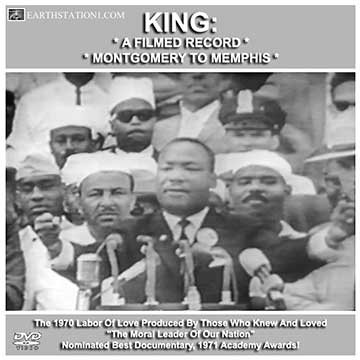
March 18, 1922: #BOTD: #HBD! Fred
Shuttlesworth, African American civil rights and voting rights
activist, co-founder of the Southern Christian Leadership
Conference who led the fight against segregation and other forms
of racism as a minister in Birmingham, Alabama who initiated and
was instrumental in the 1963 Birmingham Campaign to bring
attention to the integration efforts of African Americans in
Birmingham (d. October 5, 2011) is #born Freddie Lee Robinson in
Mount Meigs, Alabama. Freddie Lee Shuttlesworth continued to work
throughout his life against racism and for alleviation of the
problems of the homeless in Cincinnati, Ohio, where he took up a
pastorate in 1961. He returned to Birmingham after his retirement
in 2007. He worked with Martin Luther King Jr. during the civil
rights movement, though the two men often disagreed on tactics and
approaches. The Birmingham-Shuttlesworth International Airport was
named in his honor in 2008. The Birmingham Civil Rights Institute
Fred L. Shuttlesworth Human Rights Award is bestowed annually in
his name. Fred Shuttlesworth died of undisclosed causes at the age
of 89 in his hometown of Birmingham, Alabama. He is buried in the
Oak Hill Cemetery in Birmingham. The Birmingham Civil Rights
Institute announced that it intends to include Shuttlesworth's
burial site on the Civil Rights History Trail. By order of Alabama
governor Robert Bentley, flags on state government buildings were
to be lowered to half-staff until Shuttlesworth's interment. On
Sale @ 15% Off Discount Till Midnight PT!
https://store.earthstation1.com/king-a-filmed-record--montgomery-to-memphis-dvd.html
Today's
EarthStation1.com 15% Off Commemorative Memorial Title: Rowan &
Martin's Laugh-In MegaSet 2 Albums 2 Blooper Sets MP3 MP4 DVD
Today, March 18, 2026

March 18, 1924: #BOTD: #HBD! Paul Keyes,
writer and producer specializing in television comedy, known for
Rowan & Martin's Laugh-In (d. January 2, 2004) is #born in
Dorchester, Massachusetts, USA. He was also known for The Dean
Martin Show (1965) and All-Star Party for Lucille Ball (1984). He
was nominated for 10 and won 3 Emmy Awards. As a teenager Paul
Keyes met Frank Sinatra and the two became lifelong friends. Keyes
became interested in writing while serving with U.S. Army Special
Services during World War II. Keyes watched election returns in
1968 with Richard Nixon and claims to be the first person to have
addressed him as "Mr. President." Paul W. Keyes's
credits on "Rowan & Martin's Laugh-In" went beyond
producing and comedy writing. Mr. Keyes cajoled Richard Nixon to
appear on the satirical TV show and exclaim "Sock it to me"
to the camera. Mr. Keyes also hid Goldie Hawn's cue cards to
induce her to giggle and helped make the elfin former go-go dancer
a star. He began his career as an announcer at a radio station in
Portland, Maine. He left the post to serve in the Army during
World War II. After victory in Europe, he was assigned to the
Special Services unit that operated an Armed Services Network
station in Munich, where he wrote news reports and produced his
own weekly show. When he returned to Boston after the war, he had
difficulty resuming his radio career. He credited Edwin O'Connor
for giving him his start. "Ed was a production director at
WNAC," Mr. Keyes recalled in a story published in the Globe
in 1961. "When I came in to see him, he looked over my stuff
and listened to my story with interest. Next thing I heard,
O'Connor had resigned to write a book and had recommended that I
be taken on in his place." The book, of course, was "The
Last Hurrah." Mr. Keyes dreamed of working for a network, so
he soon moved to New York City and began writing every day. "It
was tough trying to make a go of it, " he recalled. "My
stuff was slow selling." He supported himself in New York by
writing sketches for Gordon Swan's "Swan Boat Show" on
WBZ in Boston, which provided him with a salary of 35 USD a week.
"There's no platform in this game, no escalator for success,"
he said in 1961. "You learn your craft by hard work, until
you find you're earning more by working less, which means you are
beginning to get recognition." Mr. Keyes wrote for Kay
Ballard's nightclub act, scripts for the Senator Claghorn
character on the "Jackie Gleason Show" and summer-stock
material for Tallulah Bankhead before getting a job at NBC. There,
he worked as a writer and producer for Steve Allen and Jack Paar,
early hosts of the "Tonight Show." While at the "Tonight
Show," he met Richard Nixon and they became friends. They
kept in touch when Mr. Keyes moved to Los Angeles to write for the
"Dean Martin Show" and later for "Laugh-In."
"Rowan and Martin's Laugh-In" first appeared as a TV
special on Sept. 9, 1967. It returned as a series that ran from
Jan. 22, 1968, to the fall of 1973. The sassy, satirical show with
the jump cuts, jive talk, and breezy sketches had a strong
influence on TV programming that followed. Popularized on the show
were such catchphrases as "Look that up in your Funk &
Wagnalls," "You bet your bippy," and "Sock it
to me." Mr. Keyes won an Emmy Award as a writer for the show
in 1968 and another as its producer in 1969. He then left the
show, because "the program has become slanted, and vulgar,
and dirty," he said in a story published in the Globe at the
time. Some suspected he disapproved at the potshots taken at Nixon
on the show, but Mr. Keyes denied it. He returned to the show 18
months later. Mr. Keyes won another Emmy Award in 1974 for
producing "The American Film Institute Salute to James
Cagney." He was nominated for seven other Emmys during a long
career in TV, which included writing for the Academy Awards and
People's Choice Award shows. A pal of movie actor John Wayne and
singer Frank Sinatra, he often wrote bits for each. His
behind-the-scenes role in the appearance of Nixon on "Laugh-In"
produced one of the most bizarre moments in TV history. "Nixon
had a reputation for no sense of humor," George Schlatter,
the creator of "Laugh-In," said in a story published
last year in the Los Angeles Times. Mr. Keyes persuaded him to
appear on "Laugh-In" to change his image. "Paul
convinced him that this would expose him to a different kind of
audience as a good guy," Schlatter said. So on Sept. 16,
1968, the year of the Tet Offensive in Vietnam and the
assassinations of Martin Luther King Jr. and Robert Kennedy, the
jowly former vice president with the 5 o'clock shadow glared into
a TV camera and exclaimed, "Sock it to me." Millions of
TV viewers were alternately appalled and impressed. "We tried
to get Humphrey to appear on the show," said Schlatter. "We
chased him all over, but he wouldn't do it." Two months
later, Richard Milhous Nixon beat Hubert Horatio Humphrey in the
presidential election.In 1994 he was inducted into the Producers
Guild of America Hall of Fame. Paul Keyes died on January 2, 2004
in Woodland Hills, Los Angeles, California, USA. On Sale @ 15% Off
Discount Till Midnight PT!
https://store.earthstation1.com/rowan-and-martin-discount-set-2-albums-2-blooper-reel-sets-mp3-mp4-dvd.html
Today's
EarthStation1.com 15% Off Commemorative Memorial Title: A Rustling
Of Leaves: Inside The Philippine Revolution DVD, MP4, USB
Today, March 18, 2026

March 18, 1928: #BOTD: #HBD: Fidel V.
Ramos, popularly known as FVR and Eddie Ramos, Filipino general
and politician who served as the 12th president of the Philippines
from 1992 to 1998 (d. July 31, 2022) is #born Fidel Valdez Ramos
in Lingayen, Pangasinan, located in the Ilocos Region of the
island of Luzon, Phillipines. Fidel Valdez Ramos CCLH GCS KGCR was
the only career military officer who reached the rank of five-star
general/admiral de jure. Rising from second lieutenant to
commander-in-chief of the armed forces, Ramos was widely credited
and admired by many for revitalizing and renewing international
confidence in the Philippine economy during his six years in
office. Ramos rose through the ranks in the Philippine military
early in his career and became Chief of the Philippine
Constabulary and Vice Chief-of-Staff of the Armed Forces of the
Philippines during the term of President Ferdinand Marcos. During
the 1986 EDSA People Power Revolution, Ramos was hailed as a hero
by many Filipinos for his decision to break away from the
administration of Marcos, and pledge allegiance and loyalty to the
newly established government of President Corazon Aquino. Prior to
his election as president, Ramos served in the cabinet of
President Corazon Aquino, first as chief-of-staff of the Armed
Forces of the Philippines (AFP), and later as Secretary of
National Defense from 1986 to 1991. He was credited with the
creation of the Philippine Army's Special Forces and the
Philippine National Police Special Action Force. After his
retirement, he remained active in politics, serving as adviser to
his successors. He died at the age of 94 from complications of
COVID-19. His cremains are buried at The Cemetery Of The Heroes in
Taguig, Southern Manila District, National Capital Region,
Philippines. On Sale @ 15% Off Discount Till Midnight PT!
https://store.earthstation1.com/a-rustling-of-leaves-inside-the-philippine-revolution-dvd.html
Today's
EarthStation1.com 15% Off Commemorative Memorial Title: Apartheid
Documentaries Collection DVD, Video Download, USB Drive
Today, March 18, 2026

March 18, 1936: #BOTD: F.W. De Klerk,
South African politician who served as final state president of
South Africa from 1989 to 1994 and as deputy president alongside
Thabo Mbeki under President Nelson Mandela from 1994 to 1996 (d.
November 11, 2021) is #born Frederik Willem De Klerk in
Johannesburg, South Africa into an influential Afrikaner family.
As South Africa's last head of state from the era of
white-minority rule, he and his government dismantled the
apartheid system and introduced universal suffrage. Ideologically
a social conservative and an economic liberal, he led the National
Party (NP) from 1989 to 1997. De Klerk studied at Potchefstroom
University before pursuing a career in law. Joining the NP, to
which he had family ties, he was elected to parliament and sat in
the white-minority government of P. W. Botha, holding a succession
of ministerial posts. As a minister, he supported and enforced
apartheid, a system of racial segregation that privileged white
South Africans. After Botha resigned in 1989, De Klerk replaced
him, first as leader of the NP and then as State President.
Although observers expected him to continue Botha's defence of
apartheid, De Klerk decided to end the policy. He was aware that
growing ethnic animosity and violence was leading South Africa
into a racial civil war. Amid this violence, the state security
forces committed widespread human rights abuses and encouraged
violence between the Xhosa and Zulu people, although De Klerk
later denied sanctioning such actions. He permitted anti-apartheid
marches to take place, legalised a range of previously banned
anti-apartheid political parties, and freed imprisoned
anti-apartheid activists such as Nelson Mandela. He also
dismantled South Africa's nuclear weapons program. De Klerk
negotiated with Mandela to fully dismantle apartheid and establish
a transition to universal suffrage. In 1993, he publicly
apologised for apartheid's harmful effects. He oversaw the 1994
non-racial election in which Mandela led the African National
Congress (ANC) to victory; De Klerk's NP took second place. De
Klerk then became Deputy President in Mandela's ANC-led coalition,
the Government of National Unity. In this position, he supported
the government's continued liberal economic policies but opposed
the Truth and Reconciliation Commission set up to investigate past
human rights abuses because he wanted total amnesty for political
crimes. His working relationship with Mandela was strained,
although he later spoke fondly of him. In May 1996, after the NP
objected to the new constitution, De Klerk withdrew it from the
coalition government; the party disbanded the following year and
reformed as the New National Party. In 1997, he retired from
active politics and thereafter lectured internationally. De Klerk
was a controversial figure among many sections of South African
society. He received many awards, including the Nobel Peace Prize
(shared with Mandela) for his role in dismantling apartheid and
bringing universal suffrage to South Africa. Conversely, he
received criticism from anti-apartheid activists for offering only
a qualified apology for apartheid, and for ignoring the human
rights abuses by state security forces. He was also condemned by
pro-apartheid Afrikaners, who contended that by abandoning
apartheid, he betrayed the interests of the country's Afrikaner
minority. On March 19, 2021, a day after his 85th birthday, it was
announced that de Klerk had been diagnosed with mesothelioma. He
died from complications of the disease in his sleep at his home in
Fresnaye, Cape Town at the age of 85. He was the last surviving
State President of South Africa. After his death, a video message
from de Klerk was released from the FW de Klerk Foundation,
apologising "without qualification" for the harm caused
from apartheid and pleading that the government and all South
Africans would embrace the constitution in a balanced manner while
also promoting economic growth, guarding the independence and
impartiality of the courts, as well as promoting non-racialism and
non-discrimination in South Africa. On November 16, 2021,
President Cyril Ramaphosa declared a four-day mourning period for
de Klerk and ordered for all of the national South African flags
to fly at half-mast from November 17 to 21 "as a mark of
respect." Though the de Klerk family determined that he would
have a private cremation and funeral, the South African government
agreed to hold a state memorial service for de Klerk "in
which government leaders, leaders of political parties and
representatives of civil society will participate" at a later
date. The state memorial service was held in Cape Town on December
12, 2021, and saw Ramaphosa deliver the keynote speech. His ashes
were given to his widow Elita Georgiades. #FWDeKlerk #SouthAfrica
#Apartheid #MP4 #VideoDownload #DVD On Sale @ 15% Off Discount
Till Midnight PT!
https://store.earthstation1.com/apartheid-documentaries-dvd-racial-segregation-in-south-africa.html
Today's
EarthStation1.com 15% Off Commemorative Memorial Title: The
Dictators: The Rise Of Fascism DVD, Video Download, USB Drive
Today, March 18, 2026
March 18, 1940: The European Civil War:
World War II: The Second European War (The European Theater Of
World War II): The Diplomatic History Of World War II: The Pact Of
Steel (German: Stahlpakt; Italian: Patto d'Acciaio; The Pact Of
Friendship And Alliance Between Germany And Italy): -- German
Fuehrer Adolf Hitler and Italian Duce Benito Mussolini meet at the
Brenner Pass in the Alps, both to celebrate their May 22, 1939
Pact of Steel and to organize their alliance against France and
the United Kingdom to include the June 10-25. 1940 Italian
Invasion Of France. The Pact of Steel (German: Stahlpakt, Italian:
Patto d'Acciaio), known formally as the Pact of Friendship and
Alliance between Germany and Italy, was a military and political
alliance between Italy and Germany that was initially drafted as a
tripartite military alliance between Japan, Italy and Germany.
While Japan wanted the focus of the pact to be aimed at the Soviet
Union, Italy and Germany wanted it aimed at the British Empire and
France. Due to this disagreement, the pact was signed without
Japan and became an agreement between Fascist Italy and Nazi
Germany, signed on May 22, 1939 by foreign ministers Galeazzo
Ciano of Italy and Joachim von Ribbentrop of Germany. Officially,
the Pact of Steel obliged Germany and Italy to aid the other
country militarily, economically or otherwise in the event of war,
and to collaborate in wartime production. The Pact aimed to ensure
that neither country was able to make peace without the agreement
of the other. The agreement was based on the assumption that a war
would not occur within three years. When Germany invaded Poland on
September 1, 1939 and war broke out on September 3, Italy was not
yet prepared for conflict and had difficulty meeting its
obligations. Consequently, Italy did not enter World War II until
June 1940, with a delayed invasion of Southern France. After the
German surrender in 1945, the Brenner Pass was part of the
ratlines that were used to escape Europe and justice by some
fleeing Nazis. On Sale @ 15% Off Discount Till Midnight PT!
https://store.earthstation1.com/the-dictators-the-rise-to-fascism-dvd-hitler-mussolini-wwii.html
Today's
EarthStation1.com 15% Off Commemorative Memorial Title: Marshal
Josip Broz Tito Documentary MP4 Video Download DVD
Today, March 18, 2026

March 18, 1948: The Aftermath Of World
War II: The Cold War: The Eastern Bloc (The Communist Bloc, The
Socialist Bloc, The Soviet Bloc): The Tito-Stalin Split (The
Yugoslav-Soviet Split): -- Soviet consultants leave Yugoslavia in
the first sign of the Tito-Stalin Split. On March 1, The Central
Committee Of The League Of Communists Of Yugoslavia (KPJ) met and
noted that Yugoslavia would remain independent only if it resisted
Soviet designs for economic development of the Eastern Bloc. The
USSR viewed Yugoslav's five-year economic development plan
unfavourably because it did not align with the needs of the
Eastern Bloc, but rather prioritised development based solely on
Yugoslavia's local development needs. The central committee also
dismissed the possibility of a Soviet-proposed federation with
Soviet-allied Bulgaria, seeing it as a form of Trojan horse
tactic, and decided to proceed with existing Yugoslav policy to
create a federation with Albania. Politburo member and government
minister Sreten Zujovic attended this meeting, and informed on the
committee's findings to the Soviets. Albanian Deputy Prime
Minister Koci Xoxe then purged all anti-Yugoslav forces from the
central committee of The Albanian Communist Party (PKSH) at their
February 26 - March 8 plenum. The PKSH central committee adopted a
resolution that official Albanian policy was pro-Yugoslav.
Albanian authorities adopted an additional secret document
detailing a planned merger of Albanian forces with the Yugoslav
army, citing the threat of invasion by Greek communist forces, and
arguing that having Yugoslav troops at the Albanian-Greek border
was an "urgent necessity". It was in response to these
moves that Soviet military advisers were withdrawn from Yugoslavia
on March 18. In the the aftermath of this withdrawal, Albania's
authoritarian leader, Prime Minister Enver Hoxha, established the
country's independence with the support of the Soviet Union, and
he had his Deputy Prime Minister Xoxe arrested, tortured and
executed. The Tito-Stalin Split was the culmination of a conflict
between the political leaderships of Yugoslavia and the Soviet
Union, under Josip Broz Tito and Joseph Stalin, respectively, in
the years following World War II. Although presented by both sides
as an ideological dispute, the conflict was as much the product of
a geopolitical struggle in the Balkans that also involved Albania,
Bulgaria, and the communist insurgency in Greece, which Tito's
Yugoslavia supported and the Soviet Union secretly opposed. In the
years following World War II, Yugoslavia pursued economic,
internal, and foreign policy objectives that did not align with
the interests of the Soviet Union and its Eastern Bloc allies. In
particular, Yugoslavia hoped to admit neighbouring Albania to the
Yugoslav federation. This fostered an atmosphere of insecurity
within the Albanian political leadership and exacerbated tensions
with the Soviet Union, which made efforts to impede
Albanian-Yugoslav integration. Yugoslav support of the communist
rebels in Greece against the wishes of the Soviet Union further
complicated the political situation. Stalin tried to pressure
Yugoslavia and moderate its policies using Bulgaria as an
intermediary. When the conflict between Yugoslavia and the Soviet
Union became public in 1948, it was portrayed as an ideological
dispute to avoid the impression of a power struggle within the
Eastern Bloc. The split ushered in purges within the Communist
Party of Yugoslavia during the Informbiro Period, an era of
Yugoslavia's history named after the Communist Information Bureau,
an organisation initiated by Stalin that had aimed to reduce
divergence among communist governments generally and the Yugoslav
government particularly, that resulted in a significant level of
disruption to the Yugoslav economy, which had previously depended
on the Eastern Bloc. The conflict also prompted fears of an
impending Soviet invasion and even a coup attempt by senior
Soviet-aligned military leaders, a fear fueled by thousands of
border incidents and incursions orchestrated by the Soviets and
their allies. Deprived of aid from the Soviet Union and the
Eastern Bloc, Yugoslavia subsequently requested of the United
States economic and military assistance for the first time in the
summer of 1948. In December, Tito announced that strategic raw
materials would be shipped to the West in return for increased
trade. In February 1949, the U.S. decided to provide Tito with
economic assistance. In return, the U.S. demanded the cessation of
Yugoslav aid to the DSE when the internal situation in Yugoslavia
allowed for such a move without endangering Tito's position.
Ultimately, Secretary Of State Dean Acheson took the position that
the Yugoslav five-year plan would have to succeed if Tito was to
prevail against Stalin. Acheson also argued that supporting Tito
was in the interest of the United States, regardless of the nature
of Tito's regime. The American aid helped Yugoslavia overcome the
poor harvests of 1948, 1949 and 1950, but there would be almost no
economic growth before 1952. Tito also received U.S. backing in
Yugoslavia's successful 1949 bid for a seat on the United Nations
Security Council, despite Soviet opposition. In 1949, the United
States provided loans to Yugoslavia, increased them in 1950, and
then provided large grants. The Yugoslavs initially avoided
seeking military aid from the U.S., believing it would provide the
Soviets with a pretext for invasion. By 1951, the Yugoslav
authorities became convinced that a Soviet attack was inevitable
irrespective of military aid from the West. Consequently,
Yugoslavia was included in the Mutual Defense Assistance Program.
The Tito-Stalin Split ended with the country's partial
rapprochement with the Soviet Union in 1955 with the signing of
the Belgrade Declaration of June 2, 1955, which brought about a
short reconciliation between the two states. The declaration
guaranteed noninterference in Yugoslavia's internal affairs and
legitimized the right to interpret other forms of socialist
development in different countries. While the declaration failed
in achieving lasting rapprochement between the two countries (a
result of Yugoslav anxiety over the Hungarian Revolution Of 1956)
it had an effect on Yugoslav disengagement from the Balkan Pact
with the NATO member states of Turkey and Greece. The document was
a cornerstone for the relations between the two countries for the
following 35 years until the collapse of the Soviet Union. (Sell
Marshal Josip Broz Tito Documentary Biography) On Sale @ 15% Off
Discount Till Midnight PT!
https://store.earthstation1.com/marshal-josip-broz-tito-dvd-yugoslav-revolutionary-president.html
Today's
EarthStation1.com 15% Off Commemorative Memorial Title: TV
Commercials: The Cable Age Classics II DVD, Download, USB Drive
Today, March 18, 2026

March 18, 1963: #BOTD: #HBD! Vanessa
Williams, American model, actress, singer, producer, dancer and
beauty, the first black woman to win the Miss America title when
she was crowned Miss America 1984, is #born Vanessa Lynn Williams
in Tarrytown, New York. Vanessa L. Williams would later resign her
title amid a media controversy surrounding nude photographs
published in Penthouse magazine. 32 years later, Williams was
offered a public apology during the Miss America 2016 pageant for
the events. Williams rebounded from the scandal with a successful
career as a singer and actress. In 1988, she released her debut
studio album The Right Stuff, whose title single saw moderate
success as well as "Dreamin'", which peaked at number 8
on the Billboard Hot 100 in the United States in 1989. With her
second and third studio albums, The Comfort Zone (1991) and The
Sweetest Days (1994), she saw continued commercial success and
received multiple Grammy Award nominations, including her
number-one single and signature song, "Save the Best for
Last", which she performed live at the 1993 Grammy Awards
ceremonies. Her later studio albums include Everlasting Love
(2005), The Real Thing (2009), and Survivor (2024). As an actress,
Williams enjoyed success on stage and screen. She made her
Broadway debut in 1994 with Kiss of the Spider Woman. In 2002, she
starred as The Witch in the revival of Stephen Sondheim's Into the
Woods that earned her a nomination for the Tony Award for Best
Actress in a Musical at the 56th Tony Awards. She starred in the
revival of Horton Foote's The Trip to Bountiful in 2013, and the
ensemble political farce POTUS: Or, Behind Every Great Dumbass Are
Seven Women Trying to Keep Him Alive in 2022. She is also known
for her appearances in television with her best known roles being
Wilhelmina Slater on Ugly Betty (2006-2010) for which she was
nominated three times for the Primetime Emmy Award for Outstanding
Supporting Actress in a Comedy Series; and Renee Perry on
Desperate Housewives (2010-2012). Since 2024, she has been
starring as Miranda Priestly in the musical The Devil Wears Prada
at the Dominion Theatre, London. On Sale @ 15% Off Discount Till
Midnight PT!
https://store.earthstation1.com/tv-commercials-the-cable-age-classics-ii-dvd.html
Today's
EarthStation1.com 15% Off Commemorative Memorial Title: Russian
Right Stuff: Soviet Space Program TV Series DVD, Download, USB
Today, March 18, 2026

March 18, 1965: Rocket Launches: Outer
Space Firsts: Space Walks: The History Of Spaceflight: The
Aftermath Of World War II: The Cold War: The Space Age: The Space
Age: Space Programs Of The Soviet Union: Human Spaceflight
Programs: The Voskhod Program: Voskhod 2 (Russian: Sunrise 2): --
History's first spacewalk occurs when Voskhod 2 (Russian:
'Sunrise-2'), a Vostok booster-based Voskhod 3KD spacecraft with
two crew members on board, Pavel Belyayev and Alexei Leonov, and
equipped with a Volga, an inflatible airlock to be extended while
in orbit, is launched at 07:00:00 UTC atop a Voskhod rocket launch
vehicle from the Baikonur Cosmodrome's Site 1 (Site 1/5, Gagarin's
Start) on a 1 day, 2 hour, 2 minute mission, wherein 90 minutes
into the flight Soviet Cosmonaut Alexei Leonov, Air Force major
general, writer, and artist, becomes the first person to walk in
space by leaving his Voskhod 2 spacecraft in a specialized and
dangerous high-pressure spacesuit for 12 minutes, 9 seconds,
beginning over north-central Africa (northern Sudan/southern
Egypt), and ending over eastern Siberia, and barely gets back into
his space craft. Though Leonov was able to complete his spacewalk
successfully, both that task and the overall mission were plagued
with problems. Leonov's only tasks were to attach a camera to the
end of the airlock to record his spacewalk and to photograph the
spacecraft. He managed to attach the camera without any problem.
However, when he tried to use the still camera on his chest, the
suit had ballooned and he was unable to reach down to the shutter
switch on his leg.[6] After his 12 minutes and 9 seconds outside
the Voskhod, Leonov found that his suit had stiffened, due to
ballooning out, to the point where he could not re-enter the
airlock. He was forced to bleed off some of his suit's pressure,
in order to be able to bend the joints, eventually going below
safety limits. Leonov did not report his action on the radio to
avoid alarming others, but Soviet state radio and television had
earlier stopped their live broadcasts from the spacecraft when the
mission experienced difficulties. The government news agency,
TASS, reported that, "outside the ship and after returning,
Leonov feels well"; however, post-Cold War Russian documents
reveal a different story. Doctors reported that Leonov nearly
suffered heatstroke - his core body temperature increased by 1.8
dg C (3.2 dg F) in 20 minutes; Leonov said he was up to his knees
in sweat, which sloshed in the suit. Later accounts report
Cosmonaut Leonov violated procedure by entering the airlock
head-first, then became stuck sideways when he turned to close the
outer hatch, forcing him to flirt with decompression sickness (the
"bends") by lowering the suit pressure so he could bend
to free himself. Leonov said that he had a suicide pill to swallow
had he been unable to re-enter the Voskhod 2, and Belyayev been
forced to abandon him in orbit. Following the space walk, the two
crew members experienced difficulty in sealing the hatch properly
due to thermal distortion caused by Leonov's lengthy troubles
returning to the craft, followed by a troublesome re-entry in
which malfunction of the automatic landing system forced the use
of its manual backup. The spacecraft was so cramped that the two
cosmonauts, both wearing spacesuits, could not return to their
seats to restore the ship's center of mass for 46 seconds after
orienting the ship for reentry and a landing in Perm Krai. The
orbital module did not properly disconnect from the landing
module, not unlike Vostok 1, causing the spherical return vehicle
to spin wildly until the modules disconnected at 100 km. The delay
of 46 seconds caused the spacecraft to land 386 km (240 mi) from
the intended landing zone, in the inhospitable forests of Upper
Kama Upland, somewhere west of Solikamsk. Although flight
controllers had no idea where the spacecraft had landed or whether
Leonov and Belyayev had survived, the cosmonauts' families were
told that they were resting after having been recovered. The two
men were both familiar with the harsh climate and knew that bears
and wolves, made aggressive by mating season, lived in the taiga;
the spacecraft carried a pistol and "plenty of ammunition",
but the incident later drove the development of a dedicated TP-82
Cosmonaut survival pistol. Although aircraft quickly located the
cosmonauts, the area was so heavily forested that helicopters
could not land. When night arrived, the temperature dropped to -5
dg C (23 dg F), and the spacecraft's hatch had been blown open by
explosive bolts. Warm clothes and supplies were dropped and the
cosmonauts spent a freezing night in the Sharik (Russian:
"capsule"). Even worse, the electrical system completely
malfunctioned so that the heater would not work, but the fans ran
at full blast. A rescue party arrived on skis the next day as it
was too risky to try an airlift from the site. The advance party
chopped wood and built a small log cabin and an enormous fire.
After a more comfortable second night in the forest, the
cosmonauts skied to a waiting helicopter several kilometers away
and flew first to Perm, then to Baikonur for their mission
debriefing. On Sale @ 15% Off Discount Till Midnight PT!
https://store.earthstation1.com/russian-right-stuff-dvd-set-space-program-secret-history-2-disc2.html
Today's
EarthStation1.com 15% Off Commemorative Memorial Title: Air War In
Vietnam: Aerial Combat Roles & Missions DVD, Download, USB
Today, March 18, 2026

March 18, 1969: The Aftermath Of World
War II: The Cold War: The Cold War In Asia: The Indochina Wars:
The Vietnam War (The Second Indochina War, The Vietnam Conflict,
The Resistance War Against America): The Cambodian Civil War:
Aerial Operations And Battles Of The Vietnam War: Operation Menu:
-- The United States secretly starts bombing the Sihanouk Trail in
Cambodia, used by communist forces to infiltrate South Vietnam, by
launching Operation Menu, a covert United States Strategic Air
Command (SAC) tactical bombing campaign conducted in eastern
Cambodia from March 18, 1969 to May 26, 1970 as part of both the
Vietnam War and the Cambodian Civil War. The targets of these
attacks were sanctuaries and base areas of the People's Army of
Vietnam (PAVN - commonly referred to during the Vietnam War as the
North Vietnamese Army [NVA]) and forces of the Viet Cong (VC),
which used them for resupply, training, and resting between
campaigns across the border in the Republic of Vietnam (South
Vietnam). The impact of the bombing campaign on the Khmer Rouge
guerrillas, the PAVN, and Cambodian civilians in the bombed areas
is disputed by historians. An official United States Air Force
record of US bombing activity over Indochina from 1964 to 1973 was
declassified by US President Bill Clinton in 2000. The report
gives details of the extent of the bombing of Cambodia, as well as
of Laos and Vietnam. According to the data, the air force began
bombing the rural regions of Cambodia along its South Vietnam
border in 1965 under the Johnson administration; this was four
years earlier than previously believed. The Menu bombings were an
escalation of what had previously been tactical air attacks. Newly
inaugurated President Richard Nixon authorized for the first time
use of long-range Boeing B-52 Stratofortress heavy bombers to
carpet bomb Cambodia. Operation Freedom Deal immediately followed
Operation Menu. Under Freedom Deal, B-52 bombing was expanded to a
much larger area of Cambodia and continued until August 1973. On
Sale @ 15% Off Discount Till Midnight PT!
https://store.earthstation1.com/air-war-in-vietnam-dvd-aircraft-roles-history1.html
Today's
EarthStation1.com #OnThisDay Commemorative Memorial Title: Race
Cartoons Film Collection DVD, Video Download, USB Flash Drive
Today, March 18, 2026
 March 18: National Lacy Oatmeal Cookie
Day: -- Unlike classic chunky oatmeal cookies, Lacy Oatmeal
cookies are much thinner, tastier, and crisp. They are best
enjoyed with ice cream or a dessert of your choice. The cookie
comes in many different flavors and serves as a sweet, healthy
option. They do not contain whole oat grains, so if you're not a
fan of oat textures but love the flavor, the Lacy Oatmeal cookie
is the best way to enjoy them. Oats are rich in vitamin B, zinc,
manganese, folate, iron, carbs, and fiber. Their beneficial
properties help reduce cholesterol and blood sugar levels, and
improve metabolism, assisting with weight loss. Despite their
natural, non-meat origin, oats are considered protein-rich and
also contain loads of antioxidants. With that being said, it's
clear that almost all oat products are healthy, including the
fan-favorite cookie. While the origin of the cookies themselves
can be dated centuries back, the exact origin of this holiday is
not exactly clear. Oatmeal, popularly known as horse food in
England, was actually part of the staple human diet in Europe and
Scotland. Oats were initially consumed as porridge in Europe
before oatcakes were created in the 18th century and became common
among soldiers as they gave them strength. These are a sour
version of the cookies, though they contain the same ingredients.
Oatmeal was introduced to North America by Scottish immigrants and
has become an integral part of the American diet, enjoyed as
porridge, cookies, and even used for skin conditions. According to
the history books, the first oatmeal cookie recipe was made by
Fannie Merrit Farmer in 1896, with lacy oatmeal cookies following
decades after. The cookie can be made using several different
recipes, each producing a biscuit with a distinct flavor. Some of
the fan favorites include those made with chocolate chips, various
nuts, and raisins. The Lacy Oatmeal cookie can be enjoyed with ice
cream, sorbet, or a hot beverage like tea.
https://store.earthstation1.com/race-cartoons-dvd-dual-layer-all-regions.html March 18: National Lacy Oatmeal Cookie
Day: -- Unlike classic chunky oatmeal cookies, Lacy Oatmeal
cookies are much thinner, tastier, and crisp. They are best
enjoyed with ice cream or a dessert of your choice. The cookie
comes in many different flavors and serves as a sweet, healthy
option. They do not contain whole oat grains, so if you're not a
fan of oat textures but love the flavor, the Lacy Oatmeal cookie
is the best way to enjoy them. Oats are rich in vitamin B, zinc,
manganese, folate, iron, carbs, and fiber. Their beneficial
properties help reduce cholesterol and blood sugar levels, and
improve metabolism, assisting with weight loss. Despite their
natural, non-meat origin, oats are considered protein-rich and
also contain loads of antioxidants. With that being said, it's
clear that almost all oat products are healthy, including the
fan-favorite cookie. While the origin of the cookies themselves
can be dated centuries back, the exact origin of this holiday is
not exactly clear. Oatmeal, popularly known as horse food in
England, was actually part of the staple human diet in Europe and
Scotland. Oats were initially consumed as porridge in Europe
before oatcakes were created in the 18th century and became common
among soldiers as they gave them strength. These are a sour
version of the cookies, though they contain the same ingredients.
Oatmeal was introduced to North America by Scottish immigrants and
has become an integral part of the American diet, enjoyed as
porridge, cookies, and even used for skin conditions. According to
the history books, the first oatmeal cookie recipe was made by
Fannie Merrit Farmer in 1896, with lacy oatmeal cookies following
decades after. The cookie can be made using several different
recipes, each producing a biscuit with a distinct flavor. Some of
the fan favorites include those made with chocolate chips, various
nuts, and raisins. The Lacy Oatmeal cookie can be enjoyed with ice
cream, sorbet, or a hot beverage like tea.
https://store.earthstation1.com/race-cartoons-dvd-dual-layer-all-regions.html
Today's
EarthStation1.com #OnThisDay Commemorative Memorial Title: Subways
Trains & Railroads! Rail Transport History DVD, Download, USB
Today, March 18, 2026
March 18: Transit Driver Appreciation
Day: -- Today we thank and appreciate our transit drivers (bus,
train and subway drivers) for doing their job well! You may not
realize it, but transit drivers make a great contribution to the
community. They ensure the safety of transit travelers, keep a
track of the stops, and bear the responsibility of dropping
passengers off at the right location. Moreover, transit drivers
put aside their comfort to make sure the passengers reach their
destination on time. Can you imagine a world without them? Without
transit drivers, we would never be able to reach the correct
destination on time. Take this opportunity to show them just how
grateful you are. While transit drivers have existed for decades,
the day to honor them was not created until much later. This
turnover in history occurred in 2009 after Hans Gerwitz and
Shannon E. Thomas published a blog post regarding Bus Driver
Appreciation Day. Once the concept was pushed on a media platform,
the idea simply caught on and was promoted by local
transit-oriented blogs in Seattle, Virginia, and Washington, D.C.
A few years later in 2013, busdriverday.org was created in
Portland to encourage the day. The very next year, the idea
further evolved and the website also added rail operators to the
list. Therefore, the name of the day was changed to Transit Driver
Appreciation Day. March 18 is the day chosen because the first bus
line, 'Carrosses a cinq sols,' was launched on this day in 1662.
This was the first form of public transport in the world that
became functional in Paris. But the idea of public transport is
centuries old. For instance, back in 4000 B.C., people traveled in
wooden boats to trade. By the 16th century, boats were replaced by
sailing ships to cover large distances across the world. These
journeys were made easier in 1807, after the invention of
steamboats and motor-powered ships. Furthermore, the industrial
revolution led to the development of other modes of trading goods
such as the motorway and advanced transport forms. These were
later used in public transit.
https://store.earthstation1.com/subways-trains-and-railroads-locomotive-films-2-dual-layer-dvd2.html
Today's
EarthStation1.com #OnThisDay Commemorative Memorial Title: Outer
Space Films 3 Project Apollo Reaching For The Moon DVD, MP4, USB
Today, March 18, 2026
March 18, 2024: #DOTD: #RIP: Thomas P.
Stafford, American Air Force officer, test pilot, and NASA
astronaut, and one of 24 astronauts who flew to the Moon, Chief Of
The Astronaut Office from 1969 to 1971 (b. September 17, 1930)
#dies of liver cancer at a care home in Satellite Beach, Florida
at the age of 93. He is buried at Greenwood Cemetery in
Weatherford, Oklahoma. Thomas P. Stafford was born Thomas Patten
Stafford in Weatherford, Oklahoma, to Dr. Thomas Sabert Stafford,
a dentist, and Mary Ellen Stafford (nee Patten), a former teacher.
After graduating from the United States Naval Academy, Stafford
was commissioned in the United States Air Force, flying the F-86
Sabre before becoming a test pilot. He was selected to become an
astronaut in 1962, and flew aboard Gemini 6A in 1965 and Gemini 9A
in 1966. In 1969, he commanded Apollo 10, the second crewed
mission to orbit the Moon. Here, he and Gene Cernan became the
first to fly an Apollo Lunar Module in lunar orbit, descending to
an altitude of nine miles (fourteen kilometres). In 1975, Stafford
was the commander of the Apollo-Soyuz Test Project (ASTP) flight,
the first joint U.S.-Soviet space mission. A brigadier general at
the time, he became the first general officer to fly in space. He
was the first member of his Naval Academy class to pin on the
first, second, and third stars of a general officer. He made six
rendezvous in space and logged 507 hours of space flight. Stafford
flew more than 120 types of fixed-wing and rotary aircraft and
three types of spacecraft. After the deaths of Wally Schirra,
Eugene Cernan, and John Young, he was the last surviving crew
member of Gemini 6A, Gemini 9A, and Apollo 10. In 1993, the
Stafford Air & Space Museum was founded in his hometown of
Weatherford, Oklahoma. Originally just two rooms, it has grown to
over 63,000 square feet (5,850 m2) of artifact space. It is a
Smithsonian affiliate and is the only museum in the world to house
test-fired engines that would have been used in the Space Race: a
U.S. F-1 engine and a Soviet NK-33 engine. It holds the Gemini 6
spacecraft that he and Schirra flew in a rendezvous with Gemini 7.
https://store.earthstation1.com/outer-space-films-3-project-apollo-reaching-for-the-moon-dv3.html
Today's
EarthStation1.com #OnThisDay Commemorative Memorial Title: The
Western Tradition TV Series DVD, MP4 Video Download, USB Drive
Today, March 18, 2026
March 18, 1845: #DOTD: #RIP: Johnny
Appleseed, American gardener, Swedenborgian missionary for The New
Church, pioneer nurseryman who introduced apple trees to large
parts of Pennsylvania, Ontario, Ohio, Indiana, and Illinois, as
well as the northern counties of present-day West Virginia, who
became an American folk legend while still alive, due to his kind,
generous ways, his leadership in conservation, and the symbolic
importance he attributed to apples. (b. September 26, 1774) #dies
of natural cuases, aged 70. Johnny Appleseed was born John Chapman
in Leominster, Massachusetts on what is now named Johnny Appleseed
Lane. He was a friend to wild animals and was regarded as a "great
medicine man" by Native Americans. He was the inspiration for
many museums and historical sites such as the Johnny Appleseed
Museum in Urbana, Ohio, and the Johnny Appleseed Heritage Center
in Ashland County, Ohio. The Fort Wayne TinCaps, a minor league
baseball team in Fort Wayne, Indiana, where Chapman spent his
final years, is named in his honor.
https://store.earthstation1.com/the-western-tradition-dvd-set-all-52-shows-13-d5213.html
Today's
EarthStation1.com #OnThisDay Commemorative Memorial Title: Hoover
Vs The Kennedys The Second Civil War TV Series MP4 Download DVD
Today, March 18, 2026
March 18, 1984: #DOTD: #RIP: Clarence
Mitchell Jr., nicknamed "the 101st U.S. Senator",
African American civil rights activist and chief lobbyist for the
NAACP for nearly 30 years who also served as a regional director
for the organization (b. March 8, 1911) #dies of an evening heart
attack aged 73 in the city of his birth, Baltimore, Maryland. On
March 23, 1984, the Sharp Street Memorial United Methodist Church
overflowed with 2,500 mourners who gathered from around the
country to pay their respects. Included among them was Harry
Hughes (Governor of Maryland), William Donald Schaefer (Mayor of
Baltimore and later Governor), Benjamin Hooks, director of the
NAACP; and Dorothy Height, president of the National Council of
Negro Women. His burial details are not publicly disclosed. The
main city courthouse in Baltimore City was renamed as the Clarence
M. Mitchell Jr. Courthouse in 1985 in his honor. Other facilities
were also named for him. Clarence Mitchell Jr. was born Clarence
Maurice Mitchell Jr. in Baltimore, Maryland. Mitchell waged a
tireless campaign on Capitol Hill, helping to secure passage of
civil rights legislation in the 1950s and 1960s: the Civil Rights
Act Of 1957, the Civil Rights Act Of 1960, the Civil Rights Act Of
1964, the Voting Rights Act Of 1965 and the Fair Housing Act
(Title VIII of the Civil Rights Act Of 1968). In 1969, he was
awarded the Spingarn Medal by the NAACP for these efforts. Later
he faced some criticism in the black community for supporting
Daniel Patrick Moynihan, then President Lyndon Johnson's Assistant
Secretary Of Labor and future distinguished U.S. Senator from New
York, who was criticized by some in the black community for a
controversial book he wrote analyzing issues of the black family
in the United States and poverty during Johnson's War On Poverty.
Mitchell was also criticized for defending the State of Israel
during its war of 1967 against Arab states. On June 9, 1980,
Mitchell was presented with the "Presidential Medal Of
Freedom" by 39th President Jimmy Carter. After his
retirement, Mitchell wrote a Sunday editorial column for The
Baltimore Sun every Sunday until his death in 1984. The Sun called
it "an extraordinary commentary on the civil rights
movement."
https://store.earthstation1.com/hoover-vs-the-kennedys-the-second-civil-war-tv-series-mp4-download-dv4.html
Today's
EarthStation1.com #OnThisDay Commemorative Memorial Title: The
Second Russian Revolution TV Series DVD, Video Download, USB Drive
Today, March 18, 2026
March 18, 1990: The Aftermath Of World
War II: The Cold War: The Dissolution Of The Soviet Union: The
Revolutions Of 1989 (The Fall Of Nations, The Autumn Of Nations,
The Fall Of Communism): The Fall Of East Germany: The 1990 East
German General Election: -- Germans in the German Democratic
Republic vote in the only free and fair parliamentary elections in
the history of the country, and the first free and fair election
held in that part of Germany since November 1932. The Alliance for
Germany, led by the East German branch of the Christian Democratic
Union (CDU), won 192 seats and emerged as the largest bloc in the
400-seat Volkskammer, having run on a platform of speedy
reunification with West Germany. The East German branch of the
Social Democratic Party (SPD), which had been dissolved in 1946
and refounded only six months before the elections, finished
second with 88 seats. The former Socialist Unity Party of Germany,
renamed the Party of Democratic Socialism (PDS), running in a free
election for the first time, finished third with 66 seats. The
Alliance was just short of the 201 seats needed to govern alone.
Lothar de Maiziere of the CDU invited the SPD to join his Alliance
partners - the German Social Union (DSU) and Democratic Awakening
(DA) - in a grand coalition. The SPD was initially cold to de
Maiziere's offer, in part because of the presence of the
right-wing DSU in de Maiziere's grouping; the SPD had originally
been willing to govern alongside all parties other than the PDS
and DSU.[2] However, they ultimately agreed. The government, which
was able to amend the constitution thanks to its two-thirds
majority, subsequently organised and ratified the reunification of
Germany, resulting in the dissolution of the German Democratic
Republic on October 3, 1990.
https://store.earthstation1.com/the-second-russian-revolution-6-dvd-set-complete-tv-serie6.html
Today's
EarthStation1.com #OnThisDay Commemorative Memorial Title: The
Wall Street Crash Of 1929 Documentary Set MP4 Video Download DVD
Today, March 18, 2026
March 18, 1947: #DOTD: #RIP: William C.
Durant, aka Billy Durant, American businessman, co-founder of
General Motors and Chevrolet, founder of Frigidaire (b. December
8, 1861) #dies from the lingering effects of a stroke in New York
City, aged 85. By the time of his death, the Durants were bankrupt
and had to sell off most of their collection of paintings and
other valuables to pay for his medical expenses. He is interred in
a private mausoleum in Woodlawn Cemetery in The Bronx, New York
City. William Crapo "Billy" Durant was a leading pioneer
of the United States automobile industry, who created the system
of multi-brand holding companies with different lines of cars; and
the co-founder of General Motors with Frederic L. Smith, and of
Chevrolet with Louis Chevrolet. In the 1920s, Durant became a
major "player" on Wall Street and on Black Tuesday
joined with members of the Rockefeller family and other financial
giants to buy large quantities of stocks, against the advice of
friends, to demonstrate to the public their confidence in the
stock market. His effort proved costly and failed to stop the
market slide. By 1936, Durant was bankrupt. He was inducted into
the Junior Achievement U.S. Business Hall of Fame in 1996. Durant
Park in Lansing, Michigan is named after him, as is Waterford
Durant High School in Waterford, Michigan. Likewise, Durant Square
in Deal, New Jersey, where he maintained a summer home, is named
after him. https://store.earthstation1.com/wastcrof19do.html
|
Today's
EarthStation1.com #OnThisDay Commemorative Memorial Title: Don
Knotts On Hollywood Palace TV Show DVD, Video Download, USB Drive
Today, March 18, 2026
March 18, 1923: #BOTD: #HBD! Andy
Granatelli, American race car driver and businessman, most
prominent as the CEO of STP motor oil company, as well as a major
figure in automobile racing events (d. December 29, 2013) is #born
Anthony in Dallas, Texas. Along with his brothers Vince and Joe,
he first worked as an auto mechanic and "speed-shop"
entrepreneur, modifying engines such as the flathead Ford into
racing-quality equipment. During World War II, he became a
promoter of automobile racing events, such as the "Hurricane
Racing Association", which combined racing opportunities for
up-and-coming drivers with crowd-pleasing theatrics. Hurricane
events, according to Granatelli in his autobiography They Call Me
Mister 500, included drivers who were experts at executing and
surviving roll-over and end-over-end crashes, and also an
ambulance that not only got caught up into the race but also
ejected a stretcher (with a dummy on it) into the way of the
racers. Granatelli died from congestive heart failure at the age
of 90 on December 29, 2013 in Santa Barbara, California. His
cremains were given his widow Dolly.
https://store.earthstation1.com/don-knotts-on-hollywood-palace-dvd-bobby-vinton-syd-charisse.html
Today's
EarthStation1.com #OnThisDay Commemorative Memorial Title: Mahatma
Mohandas Gandhi Documentaries DVD MP4 Download USB Drive
Today, March 18, 2026
March 18, 1922: India: The History Of
India: The British Raj (Crown Rule In India, Direct Rule In India,
India, The Indian Empire): The Indian Independence Movement: The
1922 Trial Of Mahatma Gandhi: -- Mohandas Gandhi is sentenced to
six years in prison for civil disobedience at the conclusion of
his sedition trial, a sentence of which he serves only two years.
On March 10, 1922, Gandhi was arrested on charges of sedition.
After the Amritsar Massacre, also known as the Jallianwala Bagh
Massacre, of hundreds of Sikh and Hindu civilians on April 13,
1919 had enraged the subcontinent, Gandhi demanded that people
stop all violence, stop all property destruction, and went on
fast-to-death to pressure Indians to stop their rioting.
Investigation committees were formed by the British, which Gandhi
asked Indians to boycott. The unfolding events, the massacre and
the British response, led Gandhi to the belief that Indians will
never get a fair equal treatment under British rulers, and he
shifted his attention to Swaraj (self rule) and political
independence for India. In 1921, Gandhi became the leader of the
Indian National Congress, which he reorganised. With Congress
behind him, Gandhi had political support. and the attention of the
British Raj. Gandhi expanded his nonviolent non-co-operation
platform to include the swadeshi policy - the boycott of
foreign-made goods, especially British goods. Linked to this was
his advocacy that khadi (homespun cloth) be worn by all Indians
instead of British-made textiles. Gandhi exhorted Indian men and
women, rich or poor, to spend time each day spinning khadi in
support of the independence movement. In addition to boycotting
British products, Gandhi urged the people to boycott British
institutions and law courts, to resign from government employment,
and to forsake British titles and honours. Gandhi thus began his
journey aimed at crippling the British India government
economically, politically and administratively. As the popularity
of non-cooperation grew among all strata of Indian society, it
threatened the power of the British Raj to such an extent that
Gandhi was arrested on March 10, 1922, tried for sedition, and
sentenced to six years' imprisonment. He began his sentence on
March 18, 1922. Ultimately, he would be released after nearly two
years in prison in order to obtain an appendicitis operation.
https://store.earthstation1.com/mahatma-mohandas-gandhi-nonviolent-revolution-biography-dvd.html
Today's
EarthStation1.com #OnThisDay Commemorative Memorial Title: Combat
At Sea Documentary Series + 2 Bonuses MP4 Video Download DVDs
Today, March 18, 2026
March 18, 1915: The European Civil War:
World War I: The First European War (The European Theater Of World
War I): The African Theatre Of World War I: The Middle Eastern
Theater Of World War I: The Battle Of Gallipoli (The Gallipoli
Campaign, The Dardanelles Campaign, The Defense Of Gallipoli):
Naval Operations In The Dardanelles Campaign: -- Three allied
pre-dreadnought battleships are sunk during a failed British and
French naval attack on the Dardanelles: the French battleship
Bouvet and the British battleships HMS Irresistible (1898) and HMS
Ocean (1898). The Naval Operations In The Dardanelles Campaign
took place against the Ottoman Empire when ships of the Royal
Navy, French Marine nationale, Imperial Russian Navy and the Royal
Australian Navy attempted to force the defences of the Dardanelles
Straits. The straits are a narrow waterway connecting the
Mediterranean Sea with the Black Sea, via the Aegean, Sea of
Marmara and the Bosphorus. The Dardanelles Campaign began as a
naval operation but the success of the Ottoman defence led to the
Gallipoli Campaign, an attempt to occupy the Gallipoli peninsula
with land forces supported by the navies, to open the sea route to
Constantinople. The Allies also tried to pass submarines through
the Dardanelles to attack Ottoman shipping in the Sea of Marmara.
https://store.earthstation1.com/combat-at-sea-dvd-set-all-12-naval-warfare-tv-shows-6-di126.html
Today's
EarthStation1.com #OnThisDay Commemorative Memorial Title:
Hemingway 4 Part TV Documentary Series DVD, Video Download, USB
Drive
Today, March 18, 2026
March 18, 1937: The Interwar Period (The
Interbellum, Between The Wars): The Spanish Civil War: The Battle
Of Guadalajara: -- Spanish Republican forces launch their
counteroffensive and defeat the Italian forces opposing them at
the Battle Of Guadalajara. At dawn, Chief of the General Staff of
the Spanish Armed Forces during the Spanish Civil War Vicente Rojo
Lluch ordered and General Cipriano Mera tp lead the Spanish 14th
Division across the pontoon bridge over the Tajuna River. They had
cover from heavy sleet, but the weather also delayed the assault.
After midday, the weather had improved enough to allow The Spanish
Republican Air Force to operate. At around 13:30, Spanish military
colonel Enrique Jurado Barrio gave the order to attack. General
General Enrique Lister was slowed by the Italian Littorio
Division, largely considered to be the best of the Italian units.
The 14th Division managed to surround Brihuega, and the Italians
retreated in panic. The remaining Italian soldiers were cleared
out by the Assault Guards and XI International Brigade. An Italian
counterattack on Republican positions failed and was repulsed by
the Assault Guard Division, arguably the best of the Spanish
Republican units. The attack by the Assault Guard Division was
spearheaded by the 1st Assault Brigade to devastating effect,
inflicting heavy losses on the Italians. The Littorio Division
saved the Italians from a complete disaster when they conducted a
well-organized retreat. The Battle Of Guadalajara (March 8-23,
1937) saw the People's Republican Army defeat Italian and
Nationalist forces attempting to encircle Madrid. The Nationalist
forces involved in the Battle Of Guadalajara were primarily the
Italian Corps of Volunteer Troops. The battle opened with an
Italian offensive on March 8. This offensive was halted by March
11. Between March 12 and March 14, renewed Italian attacks were
supported by Spanish Nationalist units. These were halted too. On
March 15, a Republican counter-offensive was prepared. The
Republicans successfully launched their counter-offensive from
March 18 to March 23.
https://store.earthstation1.com/hemingway-dvd-documentary-series-on-writer-ernest-hemingway.html
Today's
EarthStation1.com #OnThisDay Commemorative Memorial Title: WWII
Films: Japanese Internment Films About Japan MP4 Download DVD Set
Today, March 18, 2026
March 18, 1942: The European Civil War:
World War II: The Second European War (The European Theater Of
World War II): World War II: The Pacific War (The Asia-Pacific
War): The History Of Asian Americans: The History Of Japanese
Americans: The Internment Of Japanese Americans: The War
Relocation Authority (WRA): -- President Franklin D. Roosevelt
issues Executive Order 9102, which establishes The War Relocation
Authority to handle the internment, i.e. forced relocation and
detention, of Japanese Americans during World War II. It also
operated the Fort Ontario Emergency Refugee Shelter in Oswego, New
York, which was the only refugee camp set up in the United States
for refugees from Europe. The agency was terminated on June 26,
1946, by order of President Harry S. Truman.
https://store.earthstation1.com/wwii-films-japanese-internment-and-us-films-about-japan-dvd.html
Today's
EarthStation1.com #OnThisDay Commemorative Memorial Title: War
Props: The Douglas A-1 Skyraider DVD, MP4 Download, USB Drive
Today, March 18, 2026
March 18, 1945: Aviation: The History Of
Aviation: The History Of Military Aviation: Maiden Flights: -- The
Douglas XBT2D-1, prototype of the Douglas A-1 Skyraider, makes its
first flight, whereopen the United States Navy began evaluation of
the aircraft at the Naval Air Test Center (NATC) in April 1945. In
December 1946, after a designation change to AD-1, delivery of the
first production aircraft to a fleet squadron was made to VA-19A.
The Douglas A-1 Skyraider, originally known as the Douglas AD
Skyraider, is an American single-seat attack aircraft that was in
service from 1946 to the early 1980s, and served during the Korean
War and Vietnam War. The Skyraider had an unusually long career,
remaining in front-line service well into the Jet Age (when most
piston-engine attack or fighter aircraft were replaced by Jet
aircraft); thus becoming known by some as an "anachronism".
The aircraft was nicknamed "Spad", after the celebrated
French World War I bi-plane fighter, with which it has a
resemblance. It was operated by the United States Navy (USN), the
United States Marine Corps (USMC), and the United States Air Force
(USAF), and also saw service with the British Royal Navy, the
French Air Force, the Republic of Vietnam Air Force (RVNAF), and
others. It remained in U.S. service until the early 1970s. The jet
powered A-10 Thunderbolt II, though in the tradition of the the
Republic P-47 Thunderbolt fighter-bomber, was based on
specifications for a modernized Skyraider, which was itself in the
same tradition, with a heavy payload and good endurance.
https://store.earthstation1.com/war-props-the-douglas-a1-skyraider-dvd-mp4-usb-flash-dri14.html
Today's
EarthStation1.com #OnThisDay Commemorative Memorial Title: TV
Commercials: The Cable Age Classics Vol. 4 MP4 Video Download DVD
Today, March 18, 2026
March 18, 1927: #BOTD: #HBD! George
Plimpton, American journalist, writer, actor and literary editor,
widely known for his sports writing and for helping to found The
Paris Review, as well as his patrician demeanor and accent (d.
September 25,2003) is #born George Ames Plimpton in New York City.
Plimpton was known for his distinctive accent which, by Plimpton's
own admission, was often mistaken for an English accent. Plimpton
himself described it as a "New England cosmopolitan accent"
or "Eastern seaboard cosmopolitan" accent. His son,
Taylor, described it as a mixture of "old New England, old
New York, tinged with a hint of King's College King's English."
George Plimpton was also known for "participatory
journalism," including accounts of his active involvement in
professional sporting events, acting in a Western, performing a
comedy act at Caesars Palace in Las Vegas, and playing with the
New York Philharmonic Orchestra, and then recording the experience
from the point of view of an amateur. George Plimpton died in his
New York City apartment aged 76 of a heart attack later determined
to have been caused by a catecholamine surge, an umbrella term for
fast heart rhythms arising from the upper part of the heart His
remains were cremated, and in an article by Taylor Plimpton in the
July 2011 issue of the Plum Hamptons Magazine, he stated "We
shot Dad up into the sky, finally, some two and a half years after
he died. These were his wishes: for his ashes to be packed into
his favorite firework, the Kamuro - also known as the Boy's
Haircut, or Japanese Willow - a golden cascade of light that hangs
there for a moment, shimmering, before winking off into the
darkness. I was charged with packing my father's remains into the
fireworks myself."
https://store.earthstation1.com/tv-commercials-the-cable-age-classics-vol-4-mp4-video-download-d44.html
Today's
EarthStation1.com #OnThisDay Commemorative Memorial Title:
American Hot Wax (1978) DVD, MP4 Video Download, USB Flash Drive
Today, March 18, 2026
March 18, 2017: #DOTD: #RIP: Chuck Berry,
African American singer-songwriter, guitarist, musician and one of
the pioneers of rock and roll music (b. October 18, 1926) #dies at
his home near Wentzville, Missouri after suffering a bout of
pneumonia, aged 90. Berry's funeral was held on April 9, 2017, at
The Pageant, in Berry's home town of St. Louis. He was remembered
with a public viewing by family, friends, and fans in The Pageant,
a music club where he often performed. He was viewed with his
cherry-red Gibson ES-335 guitar bolted to the inside lid of the
coffin and with flower arrangements that included one sent by the
Rolling Stones in the shape of a guitar. Afterwards a private
service was held in the club celebrating Berry's life and musical
career, with the Berry family inviting 300 members of the public
into the service. Gene Simmons of Kiss gave an impromptu,
unadvertised eulogy at the service, while Little Richard was
scheduled to lead the funeral procession but was unable to attend
due to an illness. The night before, many St. Louis area bars held
a mass toast at 10 pm in Berry's honor. Berry is interred in a
mausoleum in Bellerive Gardens Cemetery in St. Louis. Chuck Berry
was born Charles Edward Anderson Berry into a middle-class African
American family in St. Louis, Missouri. With songs such as
"Maybellene" (1955), "Roll Over Beethoven"
(1956), "Rock and Roll Music" (1957) and "Johnny B.
Goode" (1958), Chuck Berry refined and developed rhythm and
blues into the major elements that made rock and roll distinctive.
Writing lyrics that focused on teen life and consumerism, and
developing a music style that included guitar solos and
showmanship, Berry was a major influence on subsequent rock music.
Berry had an interest in music from an early age and gave his
first public performance at Sumner High School. While still a high
school student he was convicted of armed robbery and was sent to a
reformatory, where he was held from 1944 to 1947. After his
release, Berry settled into married life and worked at an
automobile assembly plant. By early 1953, influenced by the guitar
riffs and showmanship techniques of the blues musician T-Bone
Walker, Berry began performing with the Johnnie Johnson Trio. His
break came when he traveled to Chicago in May 1955 and met Muddy
Waters, who suggested he contact Leonard Chess, of Chess Records.
With Chess, he recorded "Maybellene", Berry' adaptation
of the country song "Ida Red", which sold over a million
copies, reaching number one on Billboard magazine' rhythm and
blues chart. By the end of the 1950s, Berry was an established
star, with several hit records and film appearances and a
lucrative touring career. He had also established his own St.
Louis nightclub, Berry' Club Bandstand. But in January 1962, he
was sentenced to three years in prison for offenses under the Mann
Act: he had transported a 14-year-old girl across state lines.
After his release in 1963, Berry had several more hits, including
"No Particular Place to Go", "You Never Can Tell",
and "Nadine". His insistence on being paid in cash led
in 1979 to a four-month jail sentence and community service, for
tax evasion. Berry was among the first musicians to be inducted
into the Rock and Roll Hall of Fame on its opening in 1986; he was
cited for having "laid the groundwork for not only a rock and
roll sound but a rock and roll stance." Berry is included in
several of Rolling Stone magazine' "greatest of all time"
lists; he was ranked fifth on its 2004 and 2011 list of the 100
Greatest Artists of All Time. The Rock and Roll Hall of Fame' 500
Songs That Shaped Rock and Roll includes three of Berry': "Johnny
B. Goode", "Maybellene", and "Rock and Roll
Music". Berry' "Johnny B. Goode" is the only
rock-and-roll song included on the Voyager Golden Record.
https://store.earthstation1.com/american-hot-wax-1978-dvd-alan-freed-rock-39n39-ro19783939.html
Today's
EarthStation1.com #OnThisDay Commemorative Memorial Title: Rock &
Roll An Unruly History 10 Part TV Series MP4 Video Download DVD
Today, March 18, 2026
March 18, 1941: #BOTD: #HBD! Wilson
Pickettt, African American singer and songwriter, a major figure
in the development of American soul music who recorded over 50
songs which made the US R & B charts, many of which crossed
over to the Billboard Hot 100, whose best-known hits are "In
the Midnight Hour" (which he co-wrote), "Land Of 1,000
Dances", "Mustang Sally", and "Funky Broadway"
(d. January 19, 2006) is #born in Prattville, Alabama, and sang in
Baptist church choirs. He was the fourth of 11 children and called
his mother "the baddest woman in my book," telling
historian Gerri Hirshey: "I get scared of her now. She used
to hit me with anything, skillets, stove wood ... [one time I ran
away and] cried for a week. Stayed in the woods, me and my little
dog." Pickett eventually left to live with his father in
Detroit in 1955. Pickett's forceful, passionate style of singing
was developed in the church and on the streets of Detroit,[4]
under the influence of recording stars such as Little Richard,
whom he referred to as "the architect of rock and roll."
In 1955, Pickett joined the Violinaires, a gospel group. The
Violinaires played with another gospel group on concert tour in
America. After singing for four years in the popular
gospel-harmony group, Pickett, lured by the success of gospel
singers who had moved to the lucrative secular music market.
Pickett was inducted into the Rock and Roll Hall of Fame in 1991,
in recognition of his impact on songwriting and recording. Wilson
Picket died of a heart attack in Reston, Virginia hospital, aged
64; he had been suffering from health problems for the last year
of his life and had spent considerable time in the hospital. At
the time of his death, Pickett was living in Ashburn, Virginia. He
was laid to rest in a mausoleum at Evergreen Cemetery in
Louisville, Kentucky. Pickett spent many years in Louisville.
Pastor Steve Owens of Decatur, Georgia, presided over his funeral,
and Little Richard, a long-time friend of Pickett's, delivered the
eulogy. Pickett was remembered on March 20, 2006, at New York's B.
B. King Blues Club with performances by the Commitments, Ben E.
King, his long-term backing band the Midnight Movers, soul singer
Bruce "Big Daddy" Wayne, and Southside Johnny in front
of an audience that included members of his family, including two
brothers.
https://store.earthstation1.com/rock-amp-roll-an-unruly-history-10-part-tv-series-mp4-video-download-104.html
Today's
EarthStation1.com #OnThisDay Commemorative Memorial Title: The
Golden Age Of Rock 'N' Roll DVD, MP4 Video Download, Flash Drive
Today, March 18, 2026
March 18, 2001: #DOTD: #RIP: John
Phillips, American singer, guitarist, songwriter, and promoter (b.
August 30, 1935) #dies of heart failure in Los Angeles, California
at the age of 65, days after completing recording sessions for a
new album. He is interred at Forest Lawn Cemetery in Cathedral
City, near Palm Springs, California. Born John Edmund Andrew
Phillips in Parris Island, South Carolina, he is best known as the
leader of the vocal group The Mamas & the Papas. He was one of
the chief organizers of the 1967 Monterey Pop Festival. The Mamas
and the Papas was an American folk rock vocal group which recorded
and performed from 1965 to 1968. The group was a defining force in
the music scene of the counterculture of the 1960s. The group was
composed of John Phillips, Denny Doherty, Cass Elliot, and
Michelle Phillips (born Holly Gilliam). Their sound was based on
vocal harmonies arranged by John Phillips, the songwriter,
musician, and leader of the group who adapted folk to the new beat
style of the early 1960s. The Mamas and the Papas released five
studio albums and 17 singles over four years, six of which made
the Billboard top 10 and have sold close to 40 million records
worldwide. The band was inducted into The Rock And Roll Hall Of
Fame in 1998 for its contributions to the music industry. The band
reunited briefly to record the album People Like Us in 1971 but
had ceased touring and performing by that time. The Monterey
International Pop Music Festival was a three-day concert event
held June 16 to June 18, 1967 at the Monterey County Fairgrounds
in Monterey, California. The festival is remembered for the first
major American appearances by the Jimi Hendrix Experience, the Who
and Ravi Shankar, the first large-scale public performance of
Janis Joplin and the introduction of Otis Redding to a mass
American audience. The Monterey Pop Festival embodied the theme of
California as a focal point for the counterculture and generally
is regarded as one of the beginnings of the "Summer of Love"
in 1967; the first rock festival had been held just one week
earlier at Mount Tamalpais in Marin County, California, the KFRC
Fantasy Fair and Magic Mountain Music Festival. Because Monterey
was widely promoted and heavily attended, featured historic
performances, and was the subject of a popular theatrical
documentary film, it became an inspiration and a template for
future music festivals, including the Woodstock Festival two years
later. Rolling Stone publisher Jann Wenner said "Monterey was
the nexus - it sprang from what the Beatles began, and from it
from it sprang what followed"; the Beatles had just released
their landmark "Sgt. Pepper's Lonely Hearts Club Band"
album mere weeks before, and it as well as the Monterey Pop
Festival greatly influenced all popular music that followed them.
https://store.earthstation1.com/the-golden-age-of-rock-39n39-roll-dvd-complete-tv-series-5-39395.html
Today's
EarthStation1.com #OnThisDay Commemorative Memorial Title: The
World: A Television History Documentary Series DVD, Download, USB
Today, March 18, 2026
March 18, 1871: The Unification Of
Germany (German: Deutsche Einigung): The Franco-Prussian War (The
Franco-German War, The War Of 1870): The Siege Of Paris (The Siege
Of Paris 1870-1871): The Paris Commune (March 18 - May 28, 1871:
-- An angry mob of French revolutionaries violently seizes power
in Paris and forms a revolutionary government; in response, the
President Of The French Republic, Adolphe Thiers, orders the
evacuation of Paris to Versailles, where he could gather enough
troops to take back Paris. At about 5:30 that morning, an angry
crowd of national guardsmen and deserters from French Claude
Lecomte's regiment at Rue des Rosiers seized General
Clement-Thomas, beat him with rifle butts, pushed him into the
garden, and shot him repeatedly. A few minutes later, they did the
same to General Lecomte. Doctor Guyon, who examined the bodies
shortly afterwards, found forty bullets in Clement-Thomas's body
and nine in Lecomte's back. By late morning, the operation to
recapture the 400 obsolete muzzle-loading bronze cannons that
remained in the city at Montmartre had failed, and crowds and
barricades were appearing in all the working-class neighborhoods
of Paris. General Joseph Vinoy ordered the army to pull back to
the Seine, and French President Thiers began to organise his
withdrawal, and on the advice of General Vinoy, Thiers ordered the
evacuation to Versailles of all the regular forces in Paris, some
40,000 soldiers, including those in the fortresses around the
city; the regrouping of all the army units in Versailles; and the
departure of all government ministries from the city. That
afternoon, following the government's failed attempt to seize the
cannons, the Central Committee of the National Guard ordered the
three battalions to seize the Hotel de Ville, where they believed
the government was located. They were not aware that Thiers, the
government, and the military commanders were at the Ministry of
Foreign Affairs, where the gates were open and there were few
guards. They were also unaware that Marshal Patrice MacMahon, the
future commander of the forces against the Commune, had just
arrived at his home in Paris, having just been released from
imprisonment in Germany. As soon as he heard the news of the
uprising, he made his way to the railway station, where national
guardsmen were already stopping and checking the identity of
departing passengers. A sympathetic station manager hid him in his
office and helped him board a train, and he escaped the city.
While he was at the railway station, national guardsmen sent by
the Central Committee arrived at his house looking for him. The
Paris Commune was spontaneously formed during the aftermath of the
defeat of Emperor Napoleon III in September 1870, when the Second
French Empire swiftly collapsed, and n its stead rose a Third
Republic at war with Prussia, which laid siege to Paris for four
months. A hotbed of working-class radicalism, France's capital was
primarily defended during this time by the often politicized and
radical troops of the National Guard rather than regular Army
troops. In February 1871 Adolphe Thiers, the new chief executive
of the French national government, signed an armistice with
Prussia that disarmed the Army but not the National Guard.
Soldiers of the Commune's National Guard killed two French army
generals, and the Commune refused to accept the authority of the
French government. The regular French Army suppressed the Commune
during "La semaine sanglante" ("The Bloody Week")
beginning on May 21, 1871. Debates over the policies and outcome
of the Commune had significant influence on the ideas of Karl
Marx, who described it as an example of the "dictatorship of
the proletariat".
https://store.earthstation1.com/the-world-a-television-history-4-dual-layer-dvds-all-26-sh426.html
Today's
EarthStation1.com #OnThisDay Commemorative Memorial Title:
Pyramids In The Jungle Alfred Maudslay In Central America DVD
Download
Today, March 18, 2026
March 18, 1850: #BOTD: #HBD! Alfred
Maudslay, British diplomat, explorer, and archaeologist (d.
January 22, 1931) is #born at Lower Norwood Lodge, near London,
England into a wealthy engineering family descended from Henry
Maudslay, English machine tool innovator, tool and die maker, and
inventor considered a founding father of machine tool technology,
whose iinventions were an important foundation for the Industrial
Revolution. Alfred Percival Maudslay FRAI was one of the first
Europeans to study Maya ruins. He also fully translated and
annotated the best version of Bernal Diaz del Castillo's Historia
verdadera de la conquista de la Nueva Espana from the only
original manuscript in 1908 for the Hakluyt Society, which was
abridged in 1928. Maudslay was educated at Royal Tunbridge Wells
and Harrow School, and studied natural sciences at Trinity Hall,
Cambridge in 1868-72, where he was acquainted with John Willis
Clark, then Secretary of the Cambridge Antiquarian Society. After
graduation, Maudslay enrolled in medical school but left because
of acute bronchitis. After leaving Medical School, he moved to
Trinidad, becoming private secretary to Governor William Cairns,
and transferred with Cairns to Queensland. He subsequently moved
to Fiji to work with Sir Arthur Gordon, its governor, and helped
campaign against rebellious local tribes. Later he served as
British consul in Tonga and Samoa. In February 1880, Maudslay
resigned from the colonial service to pursue his own interests,
having spent six years in the British Pacific colonies. He then
joined his siblings in Calcutta during their round-the-world trip,
returned to Britain in December, and then set out for Guatemala
via British Honduras. In Guatemala, Maudslay began the major
archaeological work for which he is now best remembered. He
started at the Maya ruins of Quirigua and Copan where, with the
help of Frank Sarg, he hired labourers to help clear and survey
the remaining structures and artefacts. Sarg also introduced
Maudslay to the newly found ruins in Tikal and to reliable guide
Gorgonio Lopez. Maudslay was the first to describe the site of
Yaxchilan. With Teobert Maler, Alfred Maudslay explored Chichen in
the 1880s and both spent several weeks at the site and took
extensive photographs. Maudslay published the first long-form
description of Chichen Itza in his book, "Biologia
Centrali-Americana". In the course of his surveys, Maudslay
pioneered many of the later archaeological techniques. He hired
Italian expert Lorenzo Giuntini and technicians to make plaster
casts of the carvings, while Gorgonio Lopez made casts of
papier-mache. Artist Annie Hunter drew impressions of the casts
before they were shipped to museums in England and the United
States. Maudslay also took numerous detailed photographs - dry
plate photography was then a new technique - and made copies of
the inscriptions. All told, Maudslay made a total of six
expeditions to Maya ruins. After 13 years of preparation, he
published his findings in 1902 as a 5-volume compendium entitled
Biologia Centrali-Americana, which contained numerous excellent
drawings and photographs of Maya ruins, Maudslay's commentary, and
an appendix on archaic calendars by Joseph Thompson Goodman.
Maudslay also applied for permission to make a survey of Monte
Alban in Oaxaca but when he finally received permission in 1902,
he could no longer finance the work with his own money. The firm
of Maudslay, Sons and Field had gone bankrupt and reduced
Maudslay's income. He unsuccessfully applied for funding from the
Carnegie Institution. The Maudslays moved to San Angel near Mexico
City for two years. In 1905, Maudslay began to translate the
memoirs of Bernal Diaz del Castillo, who had been a soldier in the
troops of the conquistadors; he completed it in 1912. In 1907 the
Maudslays moved permanently back to Britain. Maudslay become a
President of the Royal Anthropological Institute 1911-12. He also
chaired the 18th International Congress of Americanists in London
in 1912. In 1892, Maudslay married US-born Anne Cary Morris, a
granddaughter of Gouverneur Morris. For their honeymoon, the
couple sailed to Guatemala via New York and San Francisco. There
the Maudslays worked for two weeks on behalf of the Peabody Museum
of Harvard University. Their account was published in 1899 as A
Glimpse at Guatemala. Annie Maudslay died in 1926. In 1928,
Maudslay married widow Alice Purdon. In the following years he
finished his memoirs, Life in the Pacific Fifty Years Ago. Alfred
Maudslay died January 22, 1931 in Hereford, England. He was buried
in the crypt of Hereford Cathedral next to his first wife.
Materials he collected are currently stored at Harvard and the
British Museum.
https://store.earthstation1.com/pyramids-in-the-jungle-alfred-maudslay-in-central-america-dvd-download.html
Today's
EarthStation1.com #OnThisDay Commemorative Memorial Title: Shirley
Temple Black Biography Documentary DVD, Download, USB Drive
Today, March 18, 2026
March 18, 1926: #BOTD: #HBD! Peter
Graves, American film and television actor, television and
documentary host (d. March 14, 2010) is #born Peter Duesler
Aurness in Minneapolis, Minnesota, younger brother of James
Arness, star of the television series Gunsmoke. Peter Graves was
best known for his role as Jim Phelps in the CBS television series
Mission: Impossible from 1967 to 1973 (original) and from 1988 to
1990 (revival), and as the host of the long-running A & E
documentary series Biography. Graves was also known for his
portrayal of airline pilot Captain Clarence Oveur in the 1980
comedy film Airplane! and its 1982 sequel Airplane II: The Sequel.
Graves won a Primetime Emmy Award for outstanding informational
series in 1997 as host of Biography. On March 14, 2010, Peter
Graves died of a heart attack, four days before his 84th birthday,
after returning from a brunch in Los Angeles, California. His
remains were cremated, and the ashes were given to his widow Joan
Endress.
https://store.earthstation1.com/shirley-temple-black-biography-documentary-dvd-mp4-us4.html
Today's
EarthStation1.com #OnThisDay Commemorative Memorial Title: Guyana
Tragedy: The Story Of Jim Jones DVD, Video Download, USB Drive
Today, March 18, 2026
March 18, 1962: #BOTD: #HBD! Irene Cara,
Latina African American singer, songwriter, actress, dancer,
producer and beauty (d. November 25, 2022)) is #born Irene Cara
Escalera in the Bronx, New York City where she was raised by her
father, Gaspar Cara, a Puerto Rican steel factory worker and
retired saxophonist, and her mother, Louise Escalera, a Cuban
movie theater usher. In 1971-1972, Irene Cara was a beloved
regular on PBS's educational program The Electric Company as a
member of the Short Circus, the show's band. Television brought
Cara international acclaim for serious dramatic roles in Roots:
The Next Generations and Guyana Tragedy: The Story of Jim Jones.
John Willis' Screen World, Vol. 28, named her one of twelve
"Promising New Actors of 1976"; that same year, a
readers' poll in Right On! magazine named her Top Actress. She
rose to international prominence for her role as Coco Hernandez in
the 1980 musical film Fame, and for recording the film's title
song "Fame", which reached No. 1 in several countries.
In 1983, Cara co-wrote and sang the song "Flashdance... What
a Feeling" (from the film Flashdance), for which she shared
an Academy Award for Best Original Song and won a Grammy Award for
Best Female Pop Vocal Performance in 1984. Before her success with
Fame, Cara portrayed the title character Sparkle Williams in the
original 1976 musical drama film Sparkle. In 1993, a California
jury awarded her 1.5M USD from a 1985 lawsuit she filed against
record executive Al Coury and Network Records, accusing them of
withholding royalties from the Flashdance soundtrack and her first
two solo records. Cara stated that, as a result, she was labeled
as being difficult to work with and that the music industry
"virtually blacklisted" her. Irene Cara died at her home
in Largo, Florida, at the age of 63. The official cause of death
was determined to be arteriosclerotic and hypertensive heart
disease. Her remains were cremated; the final disposition of her
ashes are not known.
https://store.earthstation1.com/guyana-tragedy-the-story-of-jim-jones-dvd-2-disc-se2.html
|